# AWS ECS vs EKS: What’s the Difference? How to Choose?

URL:: https://bmc.com/blogs/aws-ecs-vs-eks
Author:: BMC Blogs
## Highlights
> Containers need to be managed throughout their lifecycle, and many products have been created to fulfill this need. These container orchestration products range from open-source solutions such as Kubernetes and Rancher to provider-specific implementations such as:
> • Amazon Elastic Container Service (ECS)
> • Azure Kubernetes Service (AKS)
> • Elastic Kubernetes Service (EKS) ([View Highlight](https://read.readwise.io/read/01g7en758ggzg38njaxg8zb5ej))
> Amazon itself offers an extensive array of container management services and associated tools like the ECS mentioned above, EKS, AWS Fargate, and the newest option, EKS Anywhere. ([View Highlight](https://read.readwise.io/read/01g7en7fgmzh558efht2bkx24z))
> A container is a lightweight, stand-alone, portable, and executable package that includes everything required to run an application from the application itself to all the configurations, dependencies, system libraries, etc. ([View Highlight](https://read.readwise.io/read/01g7en7x3n4qg1pb67yj9a957a))
> we need the following things to run containers:
> • An executable environment with CPU, RAM, and storage resources
> • Networking to communicate between containers, other services, and the wider internet
> • [Storage and databases](https://bmc.com/blogs/data-lake-vs-data-warehouse-vs-database-whats-the-difference/)
> • Caching, APIs, other external services
> • Monitoring from [metrics](https://bmc.com/blogs/it-metrics/), [application and system logs](https://bmc.com/blogs/monitoring-logging-tracing/), security ([View Highlight](https://read.readwise.io/read/01g7en88076q4008cqjr4sw24h))
> The Elastic Container Service is an AWS-opinionated, fully managed container orchestration service. ECS is built with simplicity in mind without sacrificing management features. ([View Highlight](https://read.readwise.io/read/01g7en8s5tr1p82qk4gsh75rhb))
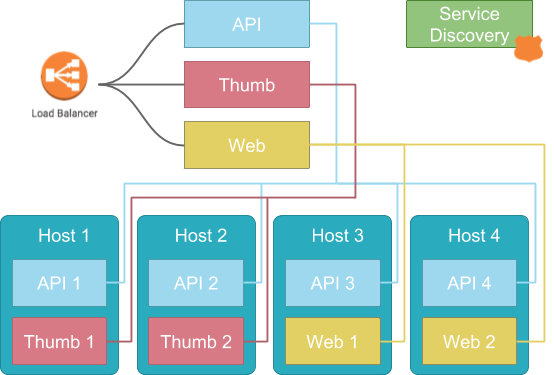
> As shown in the following image, ECS follows a simple, easily understood model. Each application in your stack (API, Thumb, Web) is defined as a service in ECS and schedules (runs) tasks (instances) on one or more underlying hosts that meet the resource requirements defined for each service. ([View Highlight](https://read.readwise.io/read/01g7ena1erg55qe2wn9wze5r56))
>  ([View Highlight](https://read.readwise.io/read/01g7ena2jetrjqr53bhg97d1re))
> This model is relatively simple to understand and implement for containerized workloads as it closely resembles a traditional server-based implementation ([View Highlight](https://read.readwise.io/read/01g7ena890t6qpwk2pz22e7r8r))
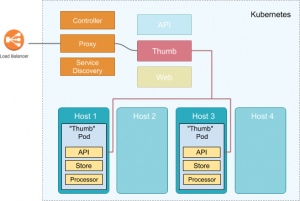
> The primary difference between ECS and EKS is how they handle services such as networking and support components.
> • ECS relies on AWS-provided services like ALB, [Route 53](https://bmc.com/blogs/an-introduction-to-aws-route-53/), etc.,
> • EKS handles all these mechanisms internally, just as in any old Kubernetes cluster. ([View Highlight](https://read.readwise.io/read/01g7enakrknd92mwbem7hht3mp))
>  ([View Highlight](https://read.readwise.io/read/01g7encjgx74kpj6mxv1vhgqff))
---
Title: AWS ECS vs EKS: What’s the Difference? How to Choose?
Author: BMC Blogs
Tags: readwise, articles
date: 2024-01-30
---
# AWS ECS vs EKS: What’s the Difference? How to Choose?

URL:: https://bmc.com/blogs/aws-ecs-vs-eks
Author:: BMC Blogs
## AI-Generated Summary
With dozens of options, choosing a container management platform is no easy task. AWS has two. Learn when to use ECS and EKS in this in-depth guide.
## Highlights
> Containers need to be managed throughout their lifecycle, and many products have been created to fulfill this need. These container orchestration products range from open-source solutions such as Kubernetes and Rancher to provider-specific implementations such as:
> • Amazon Elastic Container Service (ECS)
> • Azure Kubernetes Service (AKS)
> • Elastic Kubernetes Service (EKS) ([View Highlight](https://read.readwise.io/read/01g7en758ggzg38njaxg8zb5ej))
> Amazon itself offers an extensive array of container management services and associated tools like the ECS mentioned above, EKS, AWS Fargate, and the newest option, EKS Anywhere. ([View Highlight](https://read.readwise.io/read/01g7en7fgmzh558efht2bkx24z))
> A container is a lightweight, stand-alone, portable, and executable package that includes everything required to run an application from the application itself to all the configurations, dependencies, system libraries, etc. ([View Highlight](https://read.readwise.io/read/01g7en7x3n4qg1pb67yj9a957a))
> we need the following things to run containers:
> • An executable environment with CPU, RAM, and storage resources
> • Networking to communicate between containers, other services, and the wider internet
> • [Storage and databases](https://bmc.com/blogs/data-lake-vs-data-warehouse-vs-database-whats-the-difference/)
> • Caching, APIs, other external services
> • Monitoring from [metrics](https://bmc.com/blogs/it-metrics/), [application and system logs](https://bmc.com/blogs/monitoring-logging-tracing/), security ([View Highlight](https://read.readwise.io/read/01g7en88076q4008cqjr4sw24h))
> The Elastic Container Service is an AWS-opinionated, fully managed container orchestration service. ECS is built with simplicity in mind without sacrificing management features. ([View Highlight](https://read.readwise.io/read/01g7en8s5tr1p82qk4gsh75rhb))
> As shown in the following image, ECS follows a simple, easily understood model. Each application in your stack (API, Thumb, Web) is defined as a service in ECS and schedules (runs) tasks (instances) on one or more underlying hosts that meet the resource requirements defined for each service. ([View Highlight](https://read.readwise.io/read/01g7ena1erg55qe2wn9wze5r56))
>  ([View Highlight](https://read.readwise.io/read/01g7ena2jetrjqr53bhg97d1re))
> This model is relatively simple to understand and implement for containerized workloads as it closely resembles a traditional server-based implementation ([View Highlight](https://read.readwise.io/read/01g7ena890t6qpwk2pz22e7r8r))
> The primary difference between ECS and EKS is how they handle services such as networking and support components.
> • ECS relies on AWS-provided services like ALB, [Route 53](https://bmc.com/blogs/an-introduction-to-aws-route-53/), etc.,
> • EKS handles all these mechanisms internally, just as in any old Kubernetes cluster. ([View Highlight](https://read.readwise.io/read/01g7enakrknd92mwbem7hht3mp))
>  ([View Highlight](https://read.readwise.io/read/01g7encjgx74kpj6mxv1vhgqff))