# Burnout
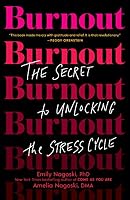
Author:: Emily Nagoski, Amelia Nagoski
## Highlights
> when it was first coined as a technical term by Herbert Freudenberger in 1975, “burnout” was defined by three components: 1. emotional exhaustion—the fatigue that comes from caring too much, for too long; 2. depersonalization—the depletion of empathy, caring, and compassion; and 3. decreased sense of accomplishment—an unconquerable sense of futility: feeling that nothing you do makes any difference. ([Location 80](https://readwise.io/to_kindle?action=open&asin=B07DT4GW16&location=80))
> As science fiction author Cassandra Clare writes, “Fiction is truth, even if it is not fact.” ([Location 200](https://readwise.io/to_kindle?action=open&asin=B07DT4GW16&location=200))
> We thrive when we have a positive goal to move toward, not just a negative state we’re trying to move away from. ([Location 214](https://readwise.io/to_kindle?action=open&asin=B07DT4GW16&location=214))
> The “cheese” of Burnout isn’t just feeling less overwhelmed and exhausted, or no longer worrying whether you’re doing “enough.” The cheese is growing mighty, feeling strong enough to cope with all the owls and mazes and anything else the world throws at you. ([Location 216](https://readwise.io/to_kindle?action=open&asin=B07DT4GW16&location=216))
> Physical activity is the single most efficient strategy for completing the stress response cycle. ([Location 413](https://readwise.io/to_kindle?action=open&asin=B07DT4GW16&location=413))
> Physical activity—literally any movement of your body—is your first line of attack in the battle against burnout. But it’s not the only thing that works to complete the stress response cycle—far from it! Here are six other evidence-based strategies: Breathing. ([Location 415](https://readwise.io/to_kindle?action=open&asin=B07DT4GW16&location=415))
> Positive Social Interaction. Casual but friendly social interaction is the first external sign that the world is a safe place. ([Location 424](https://readwise.io/to_kindle?action=open&asin=B07DT4GW16&location=424))
> Laughter. Laughing together—and even just reminiscing about the times we’ve laughed together—increases relationship satisfaction. ([Location 429](https://readwise.io/to_kindle?action=open&asin=B07DT4GW16&location=429))
> Affection. When friendly chitchat with colleagues doesn’t cut it, when you’re too stressed out for laughter, deeper connection with a loving presence is called for. ([Location 433](https://readwise.io/to_kindle?action=open&asin=B07DT4GW16&location=433))
> One example of affection is the “six-second kiss” advice from relationship researcher John Gottman. Every day, he suggests, kiss your partner for six seconds. That’s one six-second kiss, mind you, not six one-second kisses. Six seconds is, if you think about it, a potentially awkwardly long kiss. But there’s a reason for it: Six seconds is too long to kiss someone you resent or dislike, and it’s far too long to kiss someone with whom you feel unsafe. Kissing for six seconds requires that you stop and deliberately notice that you like this person, that you trust them, and that you feel affection for them. By noticing those things, the kiss tells your body that you are safe with your tribe. ([Location 437](https://readwise.io/to_kindle?action=open&asin=B07DT4GW16&location=437))
> A Big Ol’ Cry. Anyone who says “Crying doesn’t solve anything” doesn’t know the difference between dealing with the stress and dealing with the situation that causes the stress. ([Location 462](https://readwise.io/to_kindle?action=open&asin=B07DT4GW16&location=462))
> Creative Expression. Engaging in creative activities today leads to more energy, excitement, and enthusiasm tomorrow. ([Location 467](https://readwise.io/to_kindle?action=open&asin=B07DT4GW16&location=467))
> How Do You Know You’ve Completed the Cycle? It’s like knowing when you’re full after a meal, or like knowing when you’ve had an orgasm. Your body tells you, and it’s easier for some people to recognize than others. ([Location 512](https://readwise.io/to_kindle?action=open&asin=B07DT4GW16&location=512))
> Because you experience stress every day, you have to build completing the cycle into every day. Make it a priority, like your life depends on it. Because it does. ([Location 548](https://readwise.io/to_kindle?action=open&asin=B07DT4GW16&location=548))
#### Signs You Need to Deal with the Stress, Even If It Means Ignoring the Stressor
> 1. You notice yourself doing the same, apparently pointless thing over and over again, or engaging in self-destructive behaviors. ([Location 562](https://readwise.io/to_kindle?action=open&asin=B07DT4GW16&location=562))
> You might notice yourself checking things, picking at things, thinking obsessive thoughts, or fiddling with your own body in a routinized kind of way. These are signs that the stress has overwhelmed your brain’s ability to cope rationally with the stressor. ([Location 564](https://readwise.io/to_kindle?action=open&asin=B07DT4GW16&location=564))
> 2. “Chandeliering.” This is Brené Brown’s term for the sudden, overwhelming burst of pain so intense you can no longer contain it, and you jump as high as the chandelier. It’s out of proportion to what’s happening in the here and now, but it’s not out of proportion to the suffering you’re holding inside. And it has to go somewhere. So it erupts. ([Location 566](https://readwise.io/to_kindle?action=open&asin=B07DT4GW16&location=566))
> 3. You turn into a bunny hiding under a hedge. Imagine a rabbit being chased by a fox, and she runs under a bush to hide. How long does she stay there? Until the fox is gone, right? When your brain is stuck in the middle of the cycle, it may lose the ability to recognize that the fox has gone, so you just stay under that bush—that is, you come home from work and watch cat videos while eating ice cream directly from the container, using potato chips for a spoon, or stay in bed all weekend, hiding from your life. If you’re hiding from your life, you’re past your threshold. You aren’t dealing with either the stress or the stressor. Deal with the stress so you can be well enough to deal with the stressor. ([Location 569](https://readwise.io/to_kindle?action=open&asin=B07DT4GW16&location=569))
> 4. Your body feels out of whack. Maybe you’re sick all the time: you have chronic pain, injuries that just won’t heal, or infections that keep coming back. ([Location 575](https://readwise.io/to_kindle?action=open&asin=B07DT4GW16&location=575))
### 2 #PERSIST
> Sophie, the non-exerciser, is an engineer, but she’s also a black woman, so she rarely gets to be just an engineer. She has to be an engineer and a social justice educator, teaching the oblivious white guys who surround her about the experience of being a woman of color in science and technology—not because she wants to; all she ever wanted to do is science. But since she is so often the only person of color and the only woman in the room, they all look to her to explain, ya know, why she’s the only person of color or woman in the room. ([Location 633](https://readwise.io/to_kindle?action=open&asin=B07DT4GW16&location=633))
> When a lot of effort fails to produce a satisfying amount of progress, we can change the kind of effort we’re investing. For example, the frustration of being stuck in traffic can be minimized with a GPS giving you a new route to go around the traffic. All you need to do is make sure you’ve got the GPS handy. This strategy is called planful problem-solving. ([Location 680](https://readwise.io/to_kindle?action=open&asin=B07DT4GW16&location=680))
> Dealing with Stressors You Can’t Control: Positive Reappraisal So imagine that you’re stuck in traffic and your GPS is busted. For this situation, the strategy we turn to is “positive reappraisal.”2 Positive reappraisal involves recognizing that sitting in traffic is worth it. It means deciding that the effort, the discomfort, the frustration, the unanticipated obstacles, and even the repeated failure have value—not just because they are steps toward a worthwhile goal, but because you reframe difficulties as opportunities for growth and learning.3 Some ([Location 695](https://readwise.io/to_kindle?action=open&asin=B07DT4GW16&location=695))
> Change the Expectancy: Redefine Winning Planful problem-solving and positive reappraisal are evidence-based ways to change the effort you invest as you move toward a goal. ([Location 740](https://readwise.io/to_kindle?action=open&asin=B07DT4GW16&location=740))
> Change the Expectancy: Redefine Failing ([Location 791](https://readwise.io/to_kindle?action=open&asin=B07DT4GW16&location=791))
#### When to Give Up
> So how do you know when it’s time to stop the planful problem-solving, drop the positive reappraisal, and just…quit? ([Location 871](https://readwise.io/to_kindle?action=open&asin=B07DT4GW16&location=871))
> If you want to try using this principle rationally, all you have to do is write four lists: What are the benefits of continuing? What are the benefits of stopping? What are the costs of continuing? What are the costs of stopping? ([Location 879](https://readwise.io/to_kindle?action=open&asin=B07DT4GW16&location=879))
> Our tendency to cling to the broken thing we have rather than let it go and reach for something new isn’t just a result of social learning. The stress (fear, anxiety, etc.) underlying the belief changes our decision-making, so that the more stressed we feel about change, the less likely we are to do it. ([Location 901](https://readwise.io/to_kindle?action=open&asin=B07DT4GW16&location=901))
> You can manage frustration by using planful problem-solving for stressors you can control, and positive reappraisal for stressors you can’t control. ([Location 961](https://readwise.io/to_kindle?action=open&asin=B07DT4GW16&location=961))
### 3 MEANING
> Positive psychology, as spearheaded by Martin Seligman, includes “Meaning” as one of the main elements that promote happiness in people who are otherwise healthy.2 Other research approaches meaning as a coping strategy for people who are recovering from illness or trauma. ([Location 1028](https://readwise.io/to_kindle?action=open&asin=B07DT4GW16&location=1028))
> meaning isn’t always “fun.”4 ([Location 1032](https://readwise.io/to_kindle?action=open&asin=B07DT4GW16&location=1032))
> meaning offers a “positive final value that an individual’s life can exhibit.” ([Location 1037](https://readwise.io/to_kindle?action=open&asin=B07DT4GW16&location=1037))
> meaning is not constant. ([Location 1042](https://readwise.io/to_kindle?action=open&asin=B07DT4GW16&location=1042))
> Research has found that meaning is most likely to come from three kinds of sources:15 1. pursuit and achievement of ambitious goals that leave a legacy—as in “finding a cure for HIV” or “making the world a better place for these kids”; 2. service to the divine or other spiritual calling—as in “attaining spiritual liberation and union with Akal” or “glorifying God with my words, thoughts, and deeds”; and 3. loving, emotionally intimate connection with others—as in “raising my kids so they know they’re loved, no matter what” or “loving and supporting my partner with authenticity and kindness.” ([Location 1069](https://readwise.io/to_kindle?action=open&asin=B07DT4GW16&location=1069))
### 4 THE GAME IS RIGGED
> This inability to try is called “learned helplessness.” Animals, including humans, who repeatedly find themselves in bad situations from which they can’t escape may not even try to escape, even when given the opportunity. When an animal has learned helplessness, it goes straight past frustration right to the pit of despair. It’s not a rational choice; their central nervous system has learned that when they are suffering, nothing they can do will make a difference. They have learned they are helpless. Their only available route for self-preservation is not to try. ([Location 1360](https://readwise.io/to_kindle?action=open&asin=B07DT4GW16&location=1360))
> The first step is knowing the game is rigged—seeing the way the rules are set up not just to treat some people unequally, but also to blind us to the unfairness of the rules. The next steps are to apply the first three chapters of the book: (1) Complete the cycle, to deal with the stress itself. (2) Use planful problem-solving and positive reappraisal, to keep your Monitor satisfied. And (3) engage with your Something Larger, which will heal Human Giver Syndrome. ([Location 1624](https://readwise.io/to_kindle?action=open&asin=B07DT4GW16&location=1624))
### 5 THE BIKINI INDUSTRIAL COMPLEX
> When you engage in physical activity, you know it’s good for you, because: completing the cycle and also: doing a thing. You also know that most people probably assume you’re trying to “lose weight” or “get in shape,” and part of you might still actively want to change the shape of your body. That’s all perfectly normal. Move your body anyway—because it really is good for you—and smile benevolently at the mess. Some days it will be messy as hell, other days it will be calm and clear, and every day is just part of the intensely body-neurotic world you happen to live in. ([Location 1987](https://readwise.io/to_kindle?action=open&asin=B07DT4GW16&location=1987))
### 6 CONNECT
> 3 In describing the results of a 2018 study on the health impact of loneliness, a chief medical officer for an insurance company described loneliness as having “the same impact on mortality as smoking fifteen cigarettes a day.” ([Location 2170](https://readwise.io/to_kindle?action=open&asin=B07DT4GW16&location=2170))
> This is the heretical truth: No one is “complete” without other people—and we mean this literally. To be complete without social connection is to be nourished without food. It doesn’t happen. We get hungry. We get lonely. We must feed ourselves or die. We don’t mean you “need a man” or any kind of romantic partner. We mean you need connection in any or all of its varied forms. And it is also true that the lifelong development of autonomy is as innate to human nature as the drive to connect. We need both connection and autonomy. That’s not a contradiction. Humans are built to oscillate from connection to autonomy and back again. ([Location 2186](https://readwise.io/to_kindle?action=open&asin=B07DT4GW16&location=2186))
> Science has just begun to be able to measure this phenomenon. Two-person neuroscience (2PN) is brand new and researchers are still trying to establish the most valid and effective ways to measure, in the brain, the experience of connected synchrony, but so far the results are astonishing.6 When people watch a movie together, their brains’ emotional responses synchronize, even if they’re strangers. Simply sharing physical space with someone—mere co-presence—can be enough to synchronize heartbeats. We automatically mirror the facial expression of the person we’re talking to and experience the emotion that goes with those expressions, and we involuntarily match body movements and vocal pitch.7 We are all walking around co-regulating one another all the time, synchronizing without trying, without even necessarily being aware that it’s happening.8 Your internal state is profoundly contagious, and it is profoundly susceptible to “catching” the internal states of the people around you at work and at home and at the grocery store and on the bus. ([Location 2201](https://readwise.io/to_kindle?action=open&asin=B07DT4GW16&location=2201))
> Sometimes connection is emotional support. Sometimes it’s information and education, like the medical professionals helping her relearn how to live in a body. And sometimes it’s cooking, carpools, dishes, dusting, putting things back where they belong. Public health theory calls it “instrumental support.” ([Location 2252](https://readwise.io/to_kindle?action=open&asin=B07DT4GW16&location=2252))
> relationship quality was found to be a better predictor of health than smoking, and smoking is among the strongest predictors of ill health. And the benefits of a high-quality relationship were sometimes even greater for women than for men. ([Location 2272](https://readwise.io/to_kindle?action=open&asin=B07DT4GW16&location=2272))
> Researchers found that this effect is probably due, at least in part, to the fact that people tend to take better care of themselves when they’re in a high-quality relationship. In other words, our “self-care” is facilitated by the ways we care for and are cared for by someone else. ([Location 2273](https://readwise.io/to_kindle?action=open&asin=B07DT4GW16&location=2273))
> Authenticity means “being totally yourself” and sharing the most intimate parts of yourself, including the parts people might judge.19 Being authentic requires trust, knowing that the person with whom you share these potentially rejectable thoughts and feelings will not betray you. ([Location 2317](https://readwise.io/to_kindle?action=open&asin=B07DT4GW16&location=2317))
> But strategic inauthenticity is part of trust, too. ([Location 2320](https://readwise.io/to_kindle?action=open&asin=B07DT4GW16&location=2320))
> Blythe McVicker Clinchy codified two divergent ways of knowing: “separate knowing” and “connected knowing.” In separate knowing, you separate an idea from its context and assess it in terms of some externally imposed rules—rules that have proven to be immensely powerful as a tool for scientific advancement. ([Location 2333](https://readwise.io/to_kindle?action=open&asin=B07DT4GW16&location=2333))
> Connected knowing, in contrast, involves coming to understand an idea by exploring it within its context. You put yourself in the shoes of the other person, to try on their point of view. You suspend (temporarily) your doubts, judgments, criticisms, and personal needs, in favor of exploring their perspective—not because you accept it, but because you want to understand. Then you bring in elements of your own life experience or personality, holding these up to the other point of view, testing it and turning it and testing it again, exploring what it would be like to have this person’s perspective, within your own point of view. ([Location 2345](https://readwise.io/to_kindle?action=open&asin=B07DT4GW16&location=2345))
> The blend of connected and separate knowing is “constructed knowing.” ([Location 2372](https://readwise.io/to_kindle?action=open&asin=B07DT4GW16&location=2372))
#### Signs You Need to Recharge in the Bubble of Love
> When you have been gaslit. ([Location 2383](https://readwise.io/to_kindle?action=open&asin=B07DT4GW16&location=2383))
> When you feel “not enough.” ([Location 2385](https://readwise.io/to_kindle?action=open&asin=B07DT4GW16&location=2385))
> When you’re sad. ([Location 2390](https://readwise.io/to_kindle?action=open&asin=B07DT4GW16&location=2390))
> When you are boiling with rage. ([Location 2400](https://readwise.io/to_kindle?action=open&asin=B07DT4GW16&location=2400))
> tl;dr: • Connection—with friends, family, pets, the divine, etc.—is as necessary as food and water. Humans are not built to function autonomously; we are built to oscillate between connection and autonomy and back again. • We are all constantly “co-regulating” one another without even being aware it’s happening—synchronizing heartbeats, changing moods, and helping one another feel seen and heard. • Certain kinds of connection create energy. When you share mutual trust and “connected knowing” with someone, you co-create energy that renews both people. We call this the “Bubble of Love.” • Sadness, rage, and the feeling that you are not “enough” are forms of loneliness. When you experience these emotions, connect. ([Location 2458](https://readwise.io/to_kindle?action=open&asin=B07DT4GW16&location=2458))
### 7 WHAT MAKES YOU STRONGER
> What makes you stronger is whatever happens to you after you survive the thing that didn’t kill you. What makes you stronger is rest. ([Location 2495](https://readwise.io/to_kindle?action=open&asin=B07DT4GW16&location=2495))
> The idea that you can use “grit” or “self-control” to stay focused and productive every minute of every day is not merely incorrect, it is gaslighting, and it is potentially damaging your brain. ([Location 2500](https://readwise.io/to_kindle?action=open&asin=B07DT4GW16&location=2500))
> Mental rest is not idleness; it is the time necessary for your brain to process the world.8 So, for example, while writing this book, Emily would write for an hour or two, then go put in a load of laundry or dishes. ([Location 2546](https://readwise.io/to_kindle?action=open&asin=B07DT4GW16&location=2546))
#### Active Rest
> This is active rest: working one gear while resting the others. So for example, sometimes the “rest” Emily’s brain needed was not a low-demand task like laundry or YouTube, but a different kind of writing. Result: She wrote a novel at the same time as writing this book. ([Location 2579](https://readwise.io/to_kindle?action=open&asin=B07DT4GW16&location=2579))
#### Why Sleep?
> Learning is not complete without sleep. ([Location 2598](https://readwise.io/to_kindle?action=open&asin=B07DT4GW16&location=2598))
> Emotions are not complete without sleep. ([Location 2604](https://readwise.io/to_kindle?action=open&asin=B07DT4GW16&location=2604))
> Marital satisfaction, too, is linked to sleep quality. ([Location 2606](https://readwise.io/to_kindle?action=open&asin=B07DT4GW16&location=2606))
> When we’re sleep deprived, our bodies try to compensate by activating the stress response—doses of adrenaline and cortisol to help us survive the temporary stressor of too little sleep—which masks the fatigue and impairment. ([Location 2646](https://readwise.io/to_kindle?action=open&asin=B07DT4GW16&location=2646))
> We’ve made a virtue of being exhausted, of denying ourselves rest. ([Location 2680](https://readwise.io/to_kindle?action=open&asin=B07DT4GW16&location=2680))
#### Forty-Two Percent
> So how much rest is “adequate”? Science says: 42 percent. That’s the percentage of time your body and brain need you to spend resting. It’s about ten hours out of every twenty-four. It doesn’t have to be every day; it can average out over a week or a month or more. But yeah. That much. ([Location 2701](https://readwise.io/to_kindle?action=open&asin=B07DT4GW16&location=2701))
> Broken down this way, it’s almost painfully simple and obvious: sleep, food, friends, and movement. ([Location 2782](https://readwise.io/to_kindle?action=open&asin=B07DT4GW16&location=2782))
#### The Slow Leak
> Judging your need for rest is a slow leak that drains the effectiveness of the rest you get. ([Location 2841](https://readwise.io/to_kindle?action=open&asin=B07DT4GW16&location=2841))
> Our culture treats you as if “being productive” is the most important measure of your worth, as if you are a consumable good. ([Location 2869](https://readwise.io/to_kindle?action=open&asin=B07DT4GW16&location=2869))
> tl;dr: • We will literally die without rest. Literally. Finding time for rest is not a #firstworldproblem; it’s about survival. • We are not built to persist incessantly, but to oscillate from effort to rest and back again. On average we need to spend 42 percent of our time—ten hours a day—on rest. If we don’t take the time to rest, then our bodies will revolt and force us to take the time. • Human Giver Syndrome tells us it’s “self-indulgent” to rest, which makes as much sense as believing it’s weak or self-indulgent to breathe. • Getting the rest your body requires is an act of resistance against the forces that are trying to rig the game and make you helpless. Reclaim rest and you reclaim sovereignty over your own life. ([Location 2912](https://readwise.io/to_kindle?action=open&asin=B07DT4GW16&location=2912))
### 8 GROW MIGHTY
> A demon in our past or our present that taunts us and tries to stop us from doing the things we most want to do. ([Location 2957](https://readwise.io/to_kindle?action=open&asin=B07DT4GW16&location=2957))
> Describe your madwoman, in words or illustration. Tune in to the difficult, fragile part of yourself that tries to bridge the unbridgeable chasm between you and expected-you. What does she look like? When was she born? What is her history? What does she say to you? Write out her feelings and thoughts. Notice where she’s harshly critical of you, shaming, or perfectionistic. You may even want to mark those places. Highlight them in different colors. Those are sources of exhaustion. Can you hear sadness or fear under her madness? Ask her what she fears or what she’s grieving. Listen to her stories—never forgetting she’s a madwoman. Remind her that you are the grown-up, the homeowner, or the teacher, and she can trust you to maintain the attic so that she always has a safe place to stay. Thank her for the hard work she has done to help you survive. ([Location 2989](https://readwise.io/to_kindle?action=open&asin=B07DT4GW16&location=2989))
#### Toxic Perfectionism
> The opposite of harsh self-criticism and toxic perfectionism is self-compassion. ([Location 3023](https://readwise.io/to_kindle?action=open&asin=B07DT4GW16&location=3023))
#### How to Grow Mighty, Part 1: Befriend Your Madwoman
> It’s really strange, the experience of “That is not what I meant to do, and yet that is what happened, as far as this new information is concerned.” It’s really strange when we’re doing our best, and our best falls short of what the world expects from us. When we can turn toward that strangeness with observational distance, then we are best enabled to be the change we want to see in the world. ([Location 3222](https://readwise.io/to_kindle?action=open&asin=B07DT4GW16&location=3222))
#### How to Grow Mighty, Part 3: Gratitude (*Sigh*)
#### tl;dr:
> We each have a “madwoman” in our psychological attic. She has the impossible job of managing the chasm between what we are and what Human Giver Syndrome has told us to be. • Self-compassion and gratitude empower us to recognize the difference between who we are and who the world expects us to be, without beating ourselves up or shutting ourselves off from the world. • Self-compassion is hard because healing hurts and growing stronger can be scary. But it’s worth it because healing helps us grow mighty enough to heal Human Giver Syndrome. • We don’t have to wait for the world to change before we begin to heal ourselves and one another. ([Location 3283](https://readwise.io/to_kindle?action=open&asin=B07DT4GW16&location=3283))
### CONCLUSION JOYFULLY EVER AFTER
> Isn’t joy the same as happiness? Oh, no. As Brittney Cooper writes in Eloquent Rage, “Happiness is predicated on ‘happenings,’ on what’s occurring, on whether your life is going right, and whether all is well. Joy arises from an internal clarity about our purpose.” ([Location 3296](https://readwise.io/to_kindle?action=open&asin=B07DT4GW16&location=3296))
> The cure for burnout is not “self-care”; it is all of us caring for one another. ([Location 3313](https://readwise.io/to_kindle?action=open&asin=B07DT4GW16&location=3313))
#### tl;dr:
> Just because you’ve dealt with a stressor doesn’t mean you’ve dealt with the stress. And you don’t have to wait until all your stressors are dealt with before you deal with your stress. Which is to say, you don’t have to wait for the world to be better before you make your life better—and by making your life better, you make the world better. • Wellness is not a state of being but a state of action. It is the freedom to move fluidly through the cyclical, oscillating experiences of being human. • “Human Giver Syndrome” is the contagious false belief that you have a moral obligation to give every drop of your humanity—your time, attention, energy, love, even your body—in support of others, no matter the cost to you. Pay attention to how different it feels to interact with people who treat you with care and generosity, versus people who treat you as if they are entitled to whatever they want from you. • Humans are not built to function autonomously; we are built to oscillate from connection to autonomy and back again. Connection—with friends, family, pets, the divine, etc.—is as necessary as food and water. ([Location 3318](https://readwise.io/to_kindle?action=open&asin=B07DT4GW16&location=3318))
---
Title: Burnout
Author: Emily Nagoski, Amelia Nagoski
Tags: readwise, books
date: 2024-01-30
---
# Burnout

Author:: Emily Nagoski, Amelia Nagoski
## AI-Generated Summary
None
## Highlights
> when it was first coined as a technical term by Herbert Freudenberger in 1975, “burnout” was defined by three components: 1. emotional exhaustion—the fatigue that comes from caring too much, for too long; 2. depersonalization—the depletion of empathy, caring, and compassion; and 3. decreased sense of accomplishment—an unconquerable sense of futility: feeling that nothing you do makes any difference. ([Location 80](https://readwise.io/to_kindle?action=open&asin=B07DT4GW16&location=80))
> As science fiction author Cassandra Clare writes, “Fiction is truth, even if it is not fact.” ([Location 200](https://readwise.io/to_kindle?action=open&asin=B07DT4GW16&location=200))
> We thrive when we have a positive goal to move toward, not just a negative state we’re trying to move away from. ([Location 214](https://readwise.io/to_kindle?action=open&asin=B07DT4GW16&location=214))
> The “cheese” of Burnout isn’t just feeling less overwhelmed and exhausted, or no longer worrying whether you’re doing “enough.” The cheese is growing mighty, feeling strong enough to cope with all the owls and mazes and anything else the world throws at you. ([Location 216](https://readwise.io/to_kindle?action=open&asin=B07DT4GW16&location=216))
> Physical activity is the single most efficient strategy for completing the stress response cycle. ([Location 413](https://readwise.io/to_kindle?action=open&asin=B07DT4GW16&location=413))
> Physical activity—literally any movement of your body—is your first line of attack in the battle against burnout. But it’s not the only thing that works to complete the stress response cycle—far from it! Here are six other evidence-based strategies: Breathing. ([Location 415](https://readwise.io/to_kindle?action=open&asin=B07DT4GW16&location=415))
> Positive Social Interaction. Casual but friendly social interaction is the first external sign that the world is a safe place. ([Location 424](https://readwise.io/to_kindle?action=open&asin=B07DT4GW16&location=424))
> Laughter. Laughing together—and even just reminiscing about the times we’ve laughed together—increases relationship satisfaction. ([Location 429](https://readwise.io/to_kindle?action=open&asin=B07DT4GW16&location=429))
> Affection. When friendly chitchat with colleagues doesn’t cut it, when you’re too stressed out for laughter, deeper connection with a loving presence is called for. ([Location 433](https://readwise.io/to_kindle?action=open&asin=B07DT4GW16&location=433))
> One example of affection is the “six-second kiss” advice from relationship researcher John Gottman. Every day, he suggests, kiss your partner for six seconds. That’s one six-second kiss, mind you, not six one-second kisses. Six seconds is, if you think about it, a potentially awkwardly long kiss. But there’s a reason for it: Six seconds is too long to kiss someone you resent or dislike, and it’s far too long to kiss someone with whom you feel unsafe. Kissing for six seconds requires that you stop and deliberately notice that you like this person, that you trust them, and that you feel affection for them. By noticing those things, the kiss tells your body that you are safe with your tribe. ([Location 437](https://readwise.io/to_kindle?action=open&asin=B07DT4GW16&location=437))
> A Big Ol’ Cry. Anyone who says “Crying doesn’t solve anything” doesn’t know the difference between dealing with the stress and dealing with the situation that causes the stress. ([Location 462](https://readwise.io/to_kindle?action=open&asin=B07DT4GW16&location=462))
> Creative Expression. Engaging in creative activities today leads to more energy, excitement, and enthusiasm tomorrow. ([Location 467](https://readwise.io/to_kindle?action=open&asin=B07DT4GW16&location=467))
> How Do You Know You’ve Completed the Cycle? It’s like knowing when you’re full after a meal, or like knowing when you’ve had an orgasm. Your body tells you, and it’s easier for some people to recognize than others. ([Location 512](https://readwise.io/to_kindle?action=open&asin=B07DT4GW16&location=512))
> Because you experience stress every day, you have to build completing the cycle into every day. Make it a priority, like your life depends on it. Because it does. ([Location 548](https://readwise.io/to_kindle?action=open&asin=B07DT4GW16&location=548))
#### Signs You Need to Deal with the Stress, Even If It Means Ignoring the Stressor
> 1. You notice yourself doing the same, apparently pointless thing over and over again, or engaging in self-destructive behaviors. ([Location 562](https://readwise.io/to_kindle?action=open&asin=B07DT4GW16&location=562))
> You might notice yourself checking things, picking at things, thinking obsessive thoughts, or fiddling with your own body in a routinized kind of way. These are signs that the stress has overwhelmed your brain’s ability to cope rationally with the stressor. ([Location 564](https://readwise.io/to_kindle?action=open&asin=B07DT4GW16&location=564))
> 2. “Chandeliering.” This is Brené Brown’s term for the sudden, overwhelming burst of pain so intense you can no longer contain it, and you jump as high as the chandelier. It’s out of proportion to what’s happening in the here and now, but it’s not out of proportion to the suffering you’re holding inside. And it has to go somewhere. So it erupts. ([Location 566](https://readwise.io/to_kindle?action=open&asin=B07DT4GW16&location=566))
> 3. You turn into a bunny hiding under a hedge. Imagine a rabbit being chased by a fox, and she runs under a bush to hide. How long does she stay there? Until the fox is gone, right? When your brain is stuck in the middle of the cycle, it may lose the ability to recognize that the fox has gone, so you just stay under that bush—that is, you come home from work and watch cat videos while eating ice cream directly from the container, using potato chips for a spoon, or stay in bed all weekend, hiding from your life. If you’re hiding from your life, you’re past your threshold. You aren’t dealing with either the stress or the stressor. Deal with the stress so you can be well enough to deal with the stressor. ([Location 569](https://readwise.io/to_kindle?action=open&asin=B07DT4GW16&location=569))
> 4. Your body feels out of whack. Maybe you’re sick all the time: you have chronic pain, injuries that just won’t heal, or infections that keep coming back. ([Location 575](https://readwise.io/to_kindle?action=open&asin=B07DT4GW16&location=575))
### 2 #PERSIST
> Sophie, the non-exerciser, is an engineer, but she’s also a black woman, so she rarely gets to be just an engineer. She has to be an engineer and a social justice educator, teaching the oblivious white guys who surround her about the experience of being a woman of color in science and technology—not because she wants to; all she ever wanted to do is science. But since she is so often the only person of color and the only woman in the room, they all look to her to explain, ya know, why she’s the only person of color or woman in the room. ([Location 633](https://readwise.io/to_kindle?action=open&asin=B07DT4GW16&location=633))
> When a lot of effort fails to produce a satisfying amount of progress, we can change the kind of effort we’re investing. For example, the frustration of being stuck in traffic can be minimized with a GPS giving you a new route to go around the traffic. All you need to do is make sure you’ve got the GPS handy. This strategy is called planful problem-solving. ([Location 680](https://readwise.io/to_kindle?action=open&asin=B07DT4GW16&location=680))
> Dealing with Stressors You Can’t Control: Positive Reappraisal So imagine that you’re stuck in traffic and your GPS is busted. For this situation, the strategy we turn to is “positive reappraisal.”2 Positive reappraisal involves recognizing that sitting in traffic is worth it. It means deciding that the effort, the discomfort, the frustration, the unanticipated obstacles, and even the repeated failure have value—not just because they are steps toward a worthwhile goal, but because you reframe difficulties as opportunities for growth and learning.3 Some ([Location 695](https://readwise.io/to_kindle?action=open&asin=B07DT4GW16&location=695))
> Change the Expectancy: Redefine Winning Planful problem-solving and positive reappraisal are evidence-based ways to change the effort you invest as you move toward a goal. ([Location 740](https://readwise.io/to_kindle?action=open&asin=B07DT4GW16&location=740))
> Change the Expectancy: Redefine Failing ([Location 791](https://readwise.io/to_kindle?action=open&asin=B07DT4GW16&location=791))
#### When to Give Up
> So how do you know when it’s time to stop the planful problem-solving, drop the positive reappraisal, and just…quit? ([Location 871](https://readwise.io/to_kindle?action=open&asin=B07DT4GW16&location=871))
> If you want to try using this principle rationally, all you have to do is write four lists: What are the benefits of continuing? What are the benefits of stopping? What are the costs of continuing? What are the costs of stopping? ([Location 879](https://readwise.io/to_kindle?action=open&asin=B07DT4GW16&location=879))
> Our tendency to cling to the broken thing we have rather than let it go and reach for something new isn’t just a result of social learning. The stress (fear, anxiety, etc.) underlying the belief changes our decision-making, so that the more stressed we feel about change, the less likely we are to do it. ([Location 901](https://readwise.io/to_kindle?action=open&asin=B07DT4GW16&location=901))
> You can manage frustration by using planful problem-solving for stressors you can control, and positive reappraisal for stressors you can’t control. ([Location 961](https://readwise.io/to_kindle?action=open&asin=B07DT4GW16&location=961))
### 3 MEANING
> Positive psychology, as spearheaded by Martin Seligman, includes “Meaning” as one of the main elements that promote happiness in people who are otherwise healthy.2 Other research approaches meaning as a coping strategy for people who are recovering from illness or trauma. ([Location 1028](https://readwise.io/to_kindle?action=open&asin=B07DT4GW16&location=1028))
> meaning isn’t always “fun.”4 ([Location 1032](https://readwise.io/to_kindle?action=open&asin=B07DT4GW16&location=1032))
> meaning offers a “positive final value that an individual’s life can exhibit.” ([Location 1037](https://readwise.io/to_kindle?action=open&asin=B07DT4GW16&location=1037))
> meaning is not constant. ([Location 1042](https://readwise.io/to_kindle?action=open&asin=B07DT4GW16&location=1042))
> Research has found that meaning is most likely to come from three kinds of sources:15 1. pursuit and achievement of ambitious goals that leave a legacy—as in “finding a cure for HIV” or “making the world a better place for these kids”; 2. service to the divine or other spiritual calling—as in “attaining spiritual liberation and union with Akal” or “glorifying God with my words, thoughts, and deeds”; and 3. loving, emotionally intimate connection with others—as in “raising my kids so they know they’re loved, no matter what” or “loving and supporting my partner with authenticity and kindness.” ([Location 1069](https://readwise.io/to_kindle?action=open&asin=B07DT4GW16&location=1069))
### 4 THE GAME IS RIGGED
> This inability to try is called “learned helplessness.” Animals, including humans, who repeatedly find themselves in bad situations from which they can’t escape may not even try to escape, even when given the opportunity. When an animal has learned helplessness, it goes straight past frustration right to the pit of despair. It’s not a rational choice; their central nervous system has learned that when they are suffering, nothing they can do will make a difference. They have learned they are helpless. Their only available route for self-preservation is not to try. ([Location 1360](https://readwise.io/to_kindle?action=open&asin=B07DT4GW16&location=1360))
> The first step is knowing the game is rigged—seeing the way the rules are set up not just to treat some people unequally, but also to blind us to the unfairness of the rules. The next steps are to apply the first three chapters of the book: (1) Complete the cycle, to deal with the stress itself. (2) Use planful problem-solving and positive reappraisal, to keep your Monitor satisfied. And (3) engage with your Something Larger, which will heal Human Giver Syndrome. ([Location 1624](https://readwise.io/to_kindle?action=open&asin=B07DT4GW16&location=1624))
### 5 THE BIKINI INDUSTRIAL COMPLEX
> When you engage in physical activity, you know it’s good for you, because: completing the cycle and also: doing a thing. You also know that most people probably assume you’re trying to “lose weight” or “get in shape,” and part of you might still actively want to change the shape of your body. That’s all perfectly normal. Move your body anyway—because it really is good for you—and smile benevolently at the mess. Some days it will be messy as hell, other days it will be calm and clear, and every day is just part of the intensely body-neurotic world you happen to live in. ([Location 1987](https://readwise.io/to_kindle?action=open&asin=B07DT4GW16&location=1987))
### 6 CONNECT
> 3 In describing the results of a 2018 study on the health impact of loneliness, a chief medical officer for an insurance company described loneliness as having “the same impact on mortality as smoking fifteen cigarettes a day.” ([Location 2170](https://readwise.io/to_kindle?action=open&asin=B07DT4GW16&location=2170))
> This is the heretical truth: No one is “complete” without other people—and we mean this literally. To be complete without social connection is to be nourished without food. It doesn’t happen. We get hungry. We get lonely. We must feed ourselves or die. We don’t mean you “need a man” or any kind of romantic partner. We mean you need connection in any or all of its varied forms. And it is also true that the lifelong development of autonomy is as innate to human nature as the drive to connect. We need both connection and autonomy. That’s not a contradiction. Humans are built to oscillate from connection to autonomy and back again. ([Location 2186](https://readwise.io/to_kindle?action=open&asin=B07DT4GW16&location=2186))
> Science has just begun to be able to measure this phenomenon. Two-person neuroscience (2PN) is brand new and researchers are still trying to establish the most valid and effective ways to measure, in the brain, the experience of connected synchrony, but so far the results are astonishing.6 When people watch a movie together, their brains’ emotional responses synchronize, even if they’re strangers. Simply sharing physical space with someone—mere co-presence—can be enough to synchronize heartbeats. We automatically mirror the facial expression of the person we’re talking to and experience the emotion that goes with those expressions, and we involuntarily match body movements and vocal pitch.7 We are all walking around co-regulating one another all the time, synchronizing without trying, without even necessarily being aware that it’s happening.8 Your internal state is profoundly contagious, and it is profoundly susceptible to “catching” the internal states of the people around you at work and at home and at the grocery store and on the bus. ([Location 2201](https://readwise.io/to_kindle?action=open&asin=B07DT4GW16&location=2201))
> Sometimes connection is emotional support. Sometimes it’s information and education, like the medical professionals helping her relearn how to live in a body. And sometimes it’s cooking, carpools, dishes, dusting, putting things back where they belong. Public health theory calls it “instrumental support.” ([Location 2252](https://readwise.io/to_kindle?action=open&asin=B07DT4GW16&location=2252))
> relationship quality was found to be a better predictor of health than smoking, and smoking is among the strongest predictors of ill health. And the benefits of a high-quality relationship were sometimes even greater for women than for men. ([Location 2272](https://readwise.io/to_kindle?action=open&asin=B07DT4GW16&location=2272))
> Researchers found that this effect is probably due, at least in part, to the fact that people tend to take better care of themselves when they’re in a high-quality relationship. In other words, our “self-care” is facilitated by the ways we care for and are cared for by someone else. ([Location 2273](https://readwise.io/to_kindle?action=open&asin=B07DT4GW16&location=2273))
> Authenticity means “being totally yourself” and sharing the most intimate parts of yourself, including the parts people might judge.19 Being authentic requires trust, knowing that the person with whom you share these potentially rejectable thoughts and feelings will not betray you. ([Location 2317](https://readwise.io/to_kindle?action=open&asin=B07DT4GW16&location=2317))
> But strategic inauthenticity is part of trust, too. ([Location 2320](https://readwise.io/to_kindle?action=open&asin=B07DT4GW16&location=2320))
> Blythe McVicker Clinchy codified two divergent ways of knowing: “separate knowing” and “connected knowing.” In separate knowing, you separate an idea from its context and assess it in terms of some externally imposed rules—rules that have proven to be immensely powerful as a tool for scientific advancement. ([Location 2333](https://readwise.io/to_kindle?action=open&asin=B07DT4GW16&location=2333))
> Connected knowing, in contrast, involves coming to understand an idea by exploring it within its context. You put yourself in the shoes of the other person, to try on their point of view. You suspend (temporarily) your doubts, judgments, criticisms, and personal needs, in favor of exploring their perspective—not because you accept it, but because you want to understand. Then you bring in elements of your own life experience or personality, holding these up to the other point of view, testing it and turning it and testing it again, exploring what it would be like to have this person’s perspective, within your own point of view. ([Location 2345](https://readwise.io/to_kindle?action=open&asin=B07DT4GW16&location=2345))
> The blend of connected and separate knowing is “constructed knowing.” ([Location 2372](https://readwise.io/to_kindle?action=open&asin=B07DT4GW16&location=2372))
#### Signs You Need to Recharge in the Bubble of Love
> When you have been gaslit. ([Location 2383](https://readwise.io/to_kindle?action=open&asin=B07DT4GW16&location=2383))
> When you feel “not enough.” ([Location 2385](https://readwise.io/to_kindle?action=open&asin=B07DT4GW16&location=2385))
> When you’re sad. ([Location 2390](https://readwise.io/to_kindle?action=open&asin=B07DT4GW16&location=2390))
> When you are boiling with rage. ([Location 2400](https://readwise.io/to_kindle?action=open&asin=B07DT4GW16&location=2400))
> tl;dr: • Connection—with friends, family, pets, the divine, etc.—is as necessary as food and water. Humans are not built to function autonomously; we are built to oscillate between connection and autonomy and back again. • We are all constantly “co-regulating” one another without even being aware it’s happening—synchronizing heartbeats, changing moods, and helping one another feel seen and heard. • Certain kinds of connection create energy. When you share mutual trust and “connected knowing” with someone, you co-create energy that renews both people. We call this the “Bubble of Love.” • Sadness, rage, and the feeling that you are not “enough” are forms of loneliness. When you experience these emotions, connect. ([Location 2458](https://readwise.io/to_kindle?action=open&asin=B07DT4GW16&location=2458))
### 7 WHAT MAKES YOU STRONGER
> What makes you stronger is whatever happens to you after you survive the thing that didn’t kill you. What makes you stronger is rest. ([Location 2495](https://readwise.io/to_kindle?action=open&asin=B07DT4GW16&location=2495))
> The idea that you can use “grit” or “self-control” to stay focused and productive every minute of every day is not merely incorrect, it is gaslighting, and it is potentially damaging your brain. ([Location 2500](https://readwise.io/to_kindle?action=open&asin=B07DT4GW16&location=2500))
> Mental rest is not idleness; it is the time necessary for your brain to process the world.8 So, for example, while writing this book, Emily would write for an hour or two, then go put in a load of laundry or dishes. ([Location 2546](https://readwise.io/to_kindle?action=open&asin=B07DT4GW16&location=2546))
#### Active Rest
> This is active rest: working one gear while resting the others. So for example, sometimes the “rest” Emily’s brain needed was not a low-demand task like laundry or YouTube, but a different kind of writing. Result: She wrote a novel at the same time as writing this book. ([Location 2579](https://readwise.io/to_kindle?action=open&asin=B07DT4GW16&location=2579))
#### Why Sleep?
> Learning is not complete without sleep. ([Location 2598](https://readwise.io/to_kindle?action=open&asin=B07DT4GW16&location=2598))
> Emotions are not complete without sleep. ([Location 2604](https://readwise.io/to_kindle?action=open&asin=B07DT4GW16&location=2604))
> Marital satisfaction, too, is linked to sleep quality. ([Location 2606](https://readwise.io/to_kindle?action=open&asin=B07DT4GW16&location=2606))
> When we’re sleep deprived, our bodies try to compensate by activating the stress response—doses of adrenaline and cortisol to help us survive the temporary stressor of too little sleep—which masks the fatigue and impairment. ([Location 2646](https://readwise.io/to_kindle?action=open&asin=B07DT4GW16&location=2646))
> We’ve made a virtue of being exhausted, of denying ourselves rest. ([Location 2680](https://readwise.io/to_kindle?action=open&asin=B07DT4GW16&location=2680))
#### Forty-Two Percent
> So how much rest is “adequate”? Science says: 42 percent. That’s the percentage of time your body and brain need you to spend resting. It’s about ten hours out of every twenty-four. It doesn’t have to be every day; it can average out over a week or a month or more. But yeah. That much. ([Location 2701](https://readwise.io/to_kindle?action=open&asin=B07DT4GW16&location=2701))
> Broken down this way, it’s almost painfully simple and obvious: sleep, food, friends, and movement. ([Location 2782](https://readwise.io/to_kindle?action=open&asin=B07DT4GW16&location=2782))
#### The Slow Leak
> Judging your need for rest is a slow leak that drains the effectiveness of the rest you get. ([Location 2841](https://readwise.io/to_kindle?action=open&asin=B07DT4GW16&location=2841))
> Our culture treats you as if “being productive” is the most important measure of your worth, as if you are a consumable good. ([Location 2869](https://readwise.io/to_kindle?action=open&asin=B07DT4GW16&location=2869))
> tl;dr: • We will literally die without rest. Literally. Finding time for rest is not a #firstworldproblem; it’s about survival. • We are not built to persist incessantly, but to oscillate from effort to rest and back again. On average we need to spend 42 percent of our time—ten hours a day—on rest. If we don’t take the time to rest, then our bodies will revolt and force us to take the time. • Human Giver Syndrome tells us it’s “self-indulgent” to rest, which makes as much sense as believing it’s weak or self-indulgent to breathe. • Getting the rest your body requires is an act of resistance against the forces that are trying to rig the game and make you helpless. Reclaim rest and you reclaim sovereignty over your own life. ([Location 2912](https://readwise.io/to_kindle?action=open&asin=B07DT4GW16&location=2912))
### 8 GROW MIGHTY
> A demon in our past or our present that taunts us and tries to stop us from doing the things we most want to do. ([Location 2957](https://readwise.io/to_kindle?action=open&asin=B07DT4GW16&location=2957))
> Describe your madwoman, in words or illustration. Tune in to the difficult, fragile part of yourself that tries to bridge the unbridgeable chasm between you and expected-you. What does she look like? When was she born? What is her history? What does she say to you? Write out her feelings and thoughts. Notice where she’s harshly critical of you, shaming, or perfectionistic. You may even want to mark those places. Highlight them in different colors. Those are sources of exhaustion. Can you hear sadness or fear under her madness? Ask her what she fears or what she’s grieving. Listen to her stories—never forgetting she’s a madwoman. Remind her that you are the grown-up, the homeowner, or the teacher, and she can trust you to maintain the attic so that she always has a safe place to stay. Thank her for the hard work she has done to help you survive. ([Location 2989](https://readwise.io/to_kindle?action=open&asin=B07DT4GW16&location=2989))
#### Toxic Perfectionism
> The opposite of harsh self-criticism and toxic perfectionism is self-compassion. ([Location 3023](https://readwise.io/to_kindle?action=open&asin=B07DT4GW16&location=3023))
#### How to Grow Mighty, Part 1: Befriend Your Madwoman
> It’s really strange, the experience of “That is not what I meant to do, and yet that is what happened, as far as this new information is concerned.” It’s really strange when we’re doing our best, and our best falls short of what the world expects from us. When we can turn toward that strangeness with observational distance, then we are best enabled to be the change we want to see in the world. ([Location 3222](https://readwise.io/to_kindle?action=open&asin=B07DT4GW16&location=3222))
#### How to Grow Mighty, Part 3: Gratitude (*Sigh*)
#### tl;dr:
> We each have a “madwoman” in our psychological attic. She has the impossible job of managing the chasm between what we are and what Human Giver Syndrome has told us to be. • Self-compassion and gratitude empower us to recognize the difference between who we are and who the world expects us to be, without beating ourselves up or shutting ourselves off from the world. • Self-compassion is hard because healing hurts and growing stronger can be scary. But it’s worth it because healing helps us grow mighty enough to heal Human Giver Syndrome. • We don’t have to wait for the world to change before we begin to heal ourselves and one another. ([Location 3283](https://readwise.io/to_kindle?action=open&asin=B07DT4GW16&location=3283))
### CONCLUSION JOYFULLY EVER AFTER
> Isn’t joy the same as happiness? Oh, no. As Brittney Cooper writes in Eloquent Rage, “Happiness is predicated on ‘happenings,’ on what’s occurring, on whether your life is going right, and whether all is well. Joy arises from an internal clarity about our purpose.” ([Location 3296](https://readwise.io/to_kindle?action=open&asin=B07DT4GW16&location=3296))
> The cure for burnout is not “self-care”; it is all of us caring for one another. ([Location 3313](https://readwise.io/to_kindle?action=open&asin=B07DT4GW16&location=3313))
#### tl;dr:
> Just because you’ve dealt with a stressor doesn’t mean you’ve dealt with the stress. And you don’t have to wait until all your stressors are dealt with before you deal with your stress. Which is to say, you don’t have to wait for the world to be better before you make your life better—and by making your life better, you make the world better. • Wellness is not a state of being but a state of action. It is the freedom to move fluidly through the cyclical, oscillating experiences of being human. • “Human Giver Syndrome” is the contagious false belief that you have a moral obligation to give every drop of your humanity—your time, attention, energy, love, even your body—in support of others, no matter the cost to you. Pay attention to how different it feels to interact with people who treat you with care and generosity, versus people who treat you as if they are entitled to whatever they want from you. • Humans are not built to function autonomously; we are built to oscillate from connection to autonomy and back again. Connection—with friends, family, pets, the divine, etc.—is as necessary as food and water. ([Location 3318](https://readwise.io/to_kindle?action=open&asin=B07DT4GW16&location=3318))