# Conscious Uncoupling
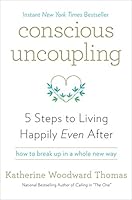
Author:: Katherine Woodward Thomas
## Highlights
> There are a million little ways that a marriage grows apart, most too mundane to mention. Yet what happened to Mark and me, in a nutshell, is that I changed. And I mean, I radically and in many ways quite unfairly, changed. It’s kind of an occupational hazard—the downside of being a teacher of growth and transformation. My husband didn’t cheat on me, he didn’t abuse me, and he was not an alcoholic or a chronic gambler. Yet, as the years went by, the core values by which we lived grew further and further apart. Where I am a change junkie, ever pushing the edge of my own and others’ evolution in pursuit of fulfilling the potential we hold in all areas of life and love, Mark, gentle-hearted man that he is, aspires to the spiritual ideal of total acceptance and appreciation of things as they are, without the need to change anyone or anything. Where I am ever fascinated to dig into the darker recesses of our psyches to discover and purify our inner motives, he believes in minimizing the focus on flaws to simply value the goodness and beauty of all living beings. It’s not like someone is right and someone is wrong here. They are both perfectly gorgeous paths to be on. And often when couples are polarized like this, they find a way to balance each other out, complementing one another and filling in the blank spots for each other in the most lovely of ways. Yet, with Mark and me, conversations about those things that mattered most and that we each held sacred in our hearts just kind of fell flat, in a way that left us little room to grow together toward a shared vision or goal, something we both admitted to needing deeply in our lives. ([Location 147](https://readwise.io/to_kindle?action=open&asin=B00RKWAGUU&location=147))
## New highlights added January 1, 2024 at 7:52 PM
### CHAPTER 1 shame, blame, and the failure of love
> The root of the word shame means “to cover,” and it’s characterized by the need to run and hide from the eyes of the world. ([Location 284](https://readwise.io/to_kindle?action=open&asin=B00RKWAGUU&location=284))
> With over 40 percent of first marriages, over 60 percent of second marriages, and over 70 percent of third marriages ending in divorce, maybe we should begin to consider it normal to change our primary partners? ([Location 393](https://readwise.io/to_kindle?action=open&asin=B00RKWAGUU&location=393))
### CHAPTER 2 bitter breakups, nasty endings, and the art of living unhappily ever after
> the brain has but one primary mission: to keep us safe and ensure our survival. It doesn’t really care that much about our spiritual aspirations, our noble ideals, or our self-image of being nice and loving people. And, as the brain is a social organ and hardwired to stay connected, it’s not necessarily prone to letting go easily of a primary attachment. ([Location 530](https://readwise.io/to_kindle?action=open&asin=B00RKWAGUU&location=530))
> In a study done at UCLA not long ago, Drs. Naomi Eisenberger and Matthew Lieberman discovered that being rejected by someone we love triggers the same alert in the brain as a primal threat. Reminding us that in earlier times, being part of a tribe was essential for survival, and expulsion from the clan could signify a most certain death. ([Location 539](https://readwise.io/to_kindle?action=open&asin=B00RKWAGUU&location=539))
> Another way we can keep a connection festering in our psyches is, ironically, by cutting it off too quickly. ([Location 557](https://readwise.io/to_kindle?action=open&asin=B00RKWAGUU&location=557))
> Such are the dangers of an unconscious uncoupling that many of us know all too well. Where the primitive, self-protective ways we’re tempted to behave at the end of love to help shield our hearts from hurt end up calcifying them closed instead. ([Location 575](https://readwise.io/to_kindle?action=open&asin=B00RKWAGUU&location=575))
> If you’ve truly breathed a person deep down into the core of your being, entwining your very identity with theirs, you will be hard pressed to purge them too quickly, simply because you suddenly now may want to. The external breakup may be quick, but the inner one rarely is. ([Location 578](https://readwise.io/to_kindle?action=open&asin=B00RKWAGUU&location=578))
### CHAPTER 3 a new possibility between us: introducing conscious uncoupling
> a Conscious Uncoupling is a breakup or divorce that is characterized by a tremendous amount of goodwill, generosity, and respect, where those separating strive to do minimal damage to themselves, to each other, and to their children (if they have any), as well as intentionally seek to create new agreements and structures designed to set everyone up to win, flourish, and thrive moving forward in life. Conscious Uncouplings are most known for their bountiful acts of kindness, big-hearted gestures of goodness, and the genuine efforts made to do the right thing for the right reasons. In short, it’s a breakup that manages to surmount, defy, and even triumph over the unconscious, primitive, and biologically based impulses we may have to lash out, punish, get revenge, and/or otherwise hurt the one by whom we feel hurt. ([Location 663](https://readwise.io/to_kindle?action=open&asin=B00RKWAGUU&location=663))
> Unlike our pancreas, kidneys, or livers, our brains are actually social organs, having developed over millions of years as though purposely designed to connect with the brains of those around us. This attachment circuitry causes our brains to link up to become one interactive system that, in addition to other functions, serves to regulate our moods and emotions. In the world of neuroscience, this is called “sociostasis,” and it is the reason we can become so deeply dependent upon, and even somewhat addicted to, our lovers. In other words, at the heart of all attachment is fear regulation, and our closest relationships serve the purpose of calming us down when we’re in danger of spinning out of control. ([Location 674](https://readwise.io/to_kindle?action=open&asin=B00RKWAGUU&location=674))
## New highlights added January 1, 2024 at 8:52 PM
> The goal of a Conscious Uncoupling is not necessarily the restoration of justice, the attainment of restitution, or the vindication of being right. The goal of a Conscious Uncoupling is to be free. And to move forward from here empowered to create a happy, healthy, and fundamentally good life for yourself and those you love. As such, we strive to take all that is ugly and rotting, and turn it into compost to grow beautiful lives. In response to the toxic downward spiral created by two interlocking limbic brains, we consciously look to see how we might interrupt and redirect the snowballing momentum of angry and reactive words and deeds. And there is no more powerful action to turn things in a harmonious direction than a gesture of authentic generosity. ([Location 811](https://readwise.io/to_kindle?action=open&asin=B00RKWAGUU&location=811))
> One way to be generous is through the simple gesture of offering a blessing to our former partners. As breakups often end with a curse of anger both on our lips and in our hearts, to say goodbye while also extending a heartfelt blessing can be incredibly moving. ([Location 825](https://readwise.io/to_kindle?action=open&asin=B00RKWAGUU&location=825))
### CHAPTER 4 how and when to do this program
> I caution you that your next love affair will not begin when you meet your next lover, but with how you end this one. For baggage left buried, wreckage unresolved, and a heart that has not healed don’t just go away; they lie in wait, ready to pounce on an unsuspecting potential new partner. Either that or they leak out in toxic and destructive ways into other relationships, including the one you have with yourself. ([Location 904](https://readwise.io/to_kindle?action=open&asin=B00RKWAGUU&location=904))
> SAVING YOUR RELATIONSHIP RECOMMENDATION #1 When not sure whether to stay or whether to go, it’s best to first work with a professional counselor to help you make a wise decision. ([Location 965](https://readwise.io/to_kindle?action=open&asin=B00RKWAGUU&location=965))
> SAVING YOUR RELATIONSHIP RECOMMENDATION #2 Before you up and leave, find the courage to share your feelings with your partner without blaming or shaming them, and do so prior to coming to a decision, so that he or she has a chance to address and/or rectify the problem. ([Location 977](https://readwise.io/to_kindle?action=open&asin=B00RKWAGUU&location=977))
> Many couples do a painful push-pull dance, taking turns pursuing and distancing. When you move toward him, he backs up from you. When he moves toward you, you retreat from him. When Andrew extended himself to meet Claudia’s needs, she did not back up or push him away. She let herself be supported and loved. I invite you to do the same and see if something new emerges between you. ([Location 984](https://readwise.io/to_kindle?action=open&asin=B00RKWAGUU&location=984))
> SAVING YOUR RELATIONSHIP RECOMMENDATION #3 If your partner responds to your concerns by taking concrete actions to improve your situation, demonstrating that he or she is taking your distress to heart, do your best to match that effort with your own and really give it your all before initiating an uncoupling. ([Location 988](https://readwise.io/to_kindle?action=open&asin=B00RKWAGUU&location=988))
> The bottom line is this: Staying together through the hard times can be a noble and beautiful choice, demonstrating high levels of integrity, commitment, and character. However, if your partner is consistently saying to you in words and deeds, “I don’t care about your feelings,” “I don’t give a crap about your needs,” and “I especially don’t give a hoot about your changing values, and have little to no interest in learning about who you’ve become,” then it may be time to consider moving on. ([Location 1018](https://readwise.io/to_kindle?action=open&asin=B00RKWAGUU&location=1018))
### STEP 1 find emotional freedom
> The first step in your Conscious Uncoupling program is to learn how to harness the energies of the wildly dark and difficult emotions you may be experiencing, such as rage, hatred, fear, and despair, and transform them from destructive impulses to hurt yourself or others into constructive drivers of positive change. In this step, you will create the conditions that can take you beyond painful old patterns in love, and awaken you to the power you hold to use this shattering to radically evolve how you live and how you love. In Step 1, Find Emotional Freedom, you will: • Discover how to have an empowered relationship with your feelings by learning to use your very big and overwhelming emotions to inspire and fuel unprecedented change in your life. • Awaken to this breakup as a life-altering opportunity to transform your disappointing and destructive patterns in love at the deepest level. • Create an Inner Sanctuary of Safety that can help you hold and contain the intensity of your emotions from a deeper, wiser center within that is able to provide you with an endless supply of strength, stability, and support. • Initiate your wholehearted recovery by setting your intention to make something beautiful of this sad parting. ([Location 1143](https://readwise.io/to_kindle?action=open&asin=B00RKWAGUU&location=1143))
## New highlights added January 1, 2024 at 10:51 PM
> Something has been broken and it is more than just your heart. It may be your feeling of being safe in the world, your ability to make sense of your life, or even your very faith in life and love. Whether you made the difficult decision to leave, or you are in the devastating position of having been left, the losses you’re facing are most likely many, deep, and multidimensional. The heart connection you called home, the shared rituals and routines that shaped your daily life, the “you” you knew yourself to be in your relationship, your standing and position in the community, the clear certainty of your life, and the future you were so carefully striving and saving for—all are gone. In their place are a plethora of raw and wildly painful and unpredictable emotions, perhaps a huge dose of wounded pride or cavernous guilt, and the dreaded drudgery of deconstructing and then reconstructing your entire life. ([Location 1155](https://readwise.io/to_kindle?action=open&asin=B00RKWAGUU&location=1155))
> What can support us in de-escalating such live-wire emotions in a healthier way is a surprisingly simple practice: labeling our feelings. Research shows it is highly effective at helping us respond rationally when in the midst of stressful life experiences. ([Location 1270](https://readwise.io/to_kindle?action=open&asin=B00RKWAGUU&location=1270))
> Apparently, the unassuming act of putting a label on each of our feelings, called “affect labeling” by psychologists, lowers arousal and puts us back in the driver’s seat of our lives. To the extent that you can name your big and overwhelming feelings, you will begin feeling safe in your own skin again. You will be home again. ([Location 1277](https://readwise.io/to_kindle?action=open&asin=B00RKWAGUU&location=1277))
> Ineffective grieving happens when you allow your pain to calcify your heart closed and fixate your identity as someone who is alone, unwanted, or abused. It threatens to doom you to living a contracted, lessened life for months or years to come. Effective grieving, however, turns the love you’ve been giving another toward yourself. ([Location 1361](https://readwise.io/to_kindle?action=open&asin=B00RKWAGUU&location=1361))
> Even if you’re feeling devalued and dismissed by the one you’ve loved, your depression is telling you that the bond you shared mattered. ([Location 1443](https://readwise.io/to_kindle?action=open&asin=B00RKWAGUU&location=1443))
> As difficult as it may be to tolerate the shadow emotions of love, it’s often best to let your heart be. Stop pushing to get rid of sorrow too quickly with a steel will. Rather, make time to cry, pausing to notice how desperately your body needs to sing its sad song without your trying to muscle your way around and beyond it. Something within you is yearning to be born, and it may need the purging of a thousand tears to do so. ([Location 1454](https://readwise.io/to_kindle?action=open&asin=B00RKWAGUU&location=1454))
> Be there for yourself in the ways you wished your former partner had been. What were the commitments you wished this person had made to you? Make them conscious, then close your eyes, put your hand over your heart, and fiercely make these commitments to yourself. Do it now when you need to hear those words of solace and support more than anything. ([Location 1462](https://readwise.io/to_kindle?action=open&asin=B00RKWAGUU&location=1462))
## New highlights added January 2, 2024 at 11:52 AM
> “It’s not about being resilient,” he says, “Resilience is when you get punched, stagger, and then jump right back up. Post-traumatic growth is different—when you stand back up, you are transformed.” ([Location 1552](https://readwise.io/to_kindle?action=open&asin=B00RKWAGUU&location=1552))
> As Winston Churchill once said, “If you’re going through hell, keep going.” ([Location 1585](https://readwise.io/to_kindle?action=open&asin=B00RKWAGUU&location=1585))
### STEP 2 reclaim your power and your life
> In Step 2 of your Conscious Uncoupling program, you’ll let go of being a wounded victim of love and shift your perspective to begin taking personal responsibility for your part in what happened. By doing so, you’ll start to see how you have been a source of your own suffering in a way that liberates you from ever repeating this dynamic again, and empowers you to evolve beyond disappointing patterns in love. In Step 2, Reclaim Your Power and Your Life, you will: • Let go of being a victim and craft a holistic and accurate breakup narrative that starts you on a path of peace and true completion. • Reflect on yourself as the source of your experience in a way that feeds you power and supports you to grow beyond your painful patterns in love. • Release unconscious and habitual patterns of people pleasing, self-abandoning, overgiving, or tolerating less than you deserve, and begin showing up in ways that are reflective of your true value. • Learn how to make amends to yourself in a way that frees you from the residue of resentment and regret. • Evolve beyond the person you were when you created your relationship and discover how you can truly trust yourself to love and be loved again. ([Location 1623](https://readwise.io/to_kindle?action=open&asin=B00RKWAGUU&location=1623))
## New highlights added January 4, 2024 at 1:57 AM
> Questions that will support you to grow and evolve are going to be ones like: “How did I give my power away in this relationship, and what can I do to reclaim it?” “How do I let myself down in ways that are similar to how I feel let down by my former partner?” “Where was I pulling on my former partner to take care of me in ways I was refusing to take care of myself? What has this cost us both?” “What were the lies I was telling myself in order to stay in the relationship?” “How does it work for me to have chosen someone so clearly unavailable?” “What disappointing story from my past is being repeated here, and how have I behaved in way(s) that covertly re-created it?” ([Location 1694](https://readwise.io/to_kindle?action=open&asin=B00RKWAGUU&location=1694))
## New highlights added January 6, 2024 at 6:31 PM
> As a way to help move the story through you, I invite you to draw, paint, sculpt, or write the horrifying parts of it to rid it from your body. This is where you get to be a victim and capture the dark underbelly of emotions of what it is to be rejected, humiliated, oppressed, abandoned, or abused. See if you can catch the powerlessness, rage, shame, and despair in color, form, or language. Love the pure humanity of your emotions, and do not be concerned with whether or not you are depicting the story accurately. Exaggerate. Embellish. Amplify and inflate. Unleash the hot rage, the dark despair, and the frozen helplessness into a swirl of colors, shadows, shapes, and designs. By allowing yourself to create uncensored, you are documenting your journey into the depths of your own vulnerable humanity, and helping to move yourself along toward the light of acceptance and integration. When done, place this work on your altar, if you have one, as a symbol of your intention to work this through to a place of conscious completion; or simply in a private, safe place where no one else will see it. ([Location 1764](https://readwise.io/to_kindle?action=open&asin=B00RKWAGUU&location=1764))
## New highlights added January 18, 2024 at 11:04 AM
> Discovering Your Source-Fracture Story ([Location 1986](https://readwise.io/to_kindle?action=open&asin=B00RKWAGUU&location=1986))
> Sigmund Freud named our tendencies to duplicate the deepest hurts of our childhood the “repetition compulsion.” And common wisdom has it that when we unconsciously re-create our worst-case scenarios over and over again, we’re trying to heal the hurts from our past. ([Location 1989](https://readwise.io/to_kindle?action=open&asin=B00RKWAGUU&location=1989))
> our tendencies to duplicate past disappointments are largely a function of the beliefs we formed long, long ago. I call these beliefs your source-fracture story. It’s the meaning you gave to the original hurt in your heart that became your underlying narrative about yourself and the possibilities you hold for happy, healthy love. ([Location 1999](https://readwise.io/to_kindle?action=open&asin=B00RKWAGUU&location=1999))
## New highlights added January 19, 2024 at 11:04 PM
> Clean completions consist of three parts. First, acknowledging what this person has meant to you. Second, appreciating the gifts he or she brought into your life. And third, making a sincere attempt to restore wholeness to the situation by offering amends, either to the people you’ve hurt directly, or by declaring your commitment to never again repeat the same mistakes with someone new. As you can see, this list does not include reconciling your irreconcilable differences, being vindicated once and for all, or finally getting your emotional needs met. There are reasons you and your former partner are parting ways. Your values are too diverse, your perspectives too polarized, or your core needs too much at odds. In a Conscious Uncoupling, this is not a problem, as we make room for differences and discordant perspectives assuming, as philosopher Ken Wilber suggests, “everyone’s right about something.” This isn’t about winning a war. It’s about giving up the idea of war altogether, and going the extra mile to make sure everyone wins moving forward. The truth is, at this point, it doesn’t really matter who’s right and who’s wrong. It doesn’t matter who hurt who more. It doesn’t even matter if you can’t agree on the reasons your relationship is ending. What matters is that you seek to bring closure in ways that help all involved to thrive when they get to the other side of this disappointment. ([Location 2802](https://readwise.io/to_kindle?action=open&asin=B00RKWAGUU&location=2802))
> Kintsugi is the centuries-old Japanese art of repairing broken pottery with silver, gold, or platinum, turning a seemingly ruined object into one of unique beauty and elegance. The philosophy behind Kintsugi is to honor the history of a damaged object by validating its value in how it’s repaired. Often the process creates something even more beautiful than the original object. So, too, can we repair a fractured relationship in a way that dignifies its history and validates its worth by how we behave when it’s over. ([Location 2925](https://readwise.io/to_kindle?action=open&asin=B00RKWAGUU&location=2925))
> True friendship is earned, one kind and selfless gesture at a time, until trust builds a home in one another’s hearts. While Conscious Uncoupling promotes a friendly parting of the ways, it is not to be confused with advocating for a transition to true friendship, which some might consider a promotion, rather than demotion, from erotic love. Aristotle believed friendship to be the purest form of love, far elevated beyond sexual love, and he described it as wishing and doing well to another for his own sake, relating to someone as though he were a second self. He called this kind of love philia: where one loves another for the person that he is, and not because he is useful to him in some way. ([Location 3277](https://readwise.io/to_kindle?action=open&asin=B00RKWAGUU&location=3277))
> In the wise and immortal words of Julia Roberts, “You know it’s love when all you want is that person to be happy, even if you’re not part of their happiness.” ([Location 3298](https://readwise.io/to_kindle?action=open&asin=B00RKWAGUU&location=3298))
---
Title: Conscious Uncoupling
Author: Katherine Woodward Thomas
Tags: readwise, books
date: 2024-01-30
---
# Conscious Uncoupling

Author:: Katherine Woodward Thomas
## AI-Generated Summary
None
## Highlights
> There are a million little ways that a marriage grows apart, most too mundane to mention. Yet what happened to Mark and me, in a nutshell, is that I changed. And I mean, I radically and in many ways quite unfairly, changed. It’s kind of an occupational hazard—the downside of being a teacher of growth and transformation. My husband didn’t cheat on me, he didn’t abuse me, and he was not an alcoholic or a chronic gambler. Yet, as the years went by, the core values by which we lived grew further and further apart. Where I am a change junkie, ever pushing the edge of my own and others’ evolution in pursuit of fulfilling the potential we hold in all areas of life and love, Mark, gentle-hearted man that he is, aspires to the spiritual ideal of total acceptance and appreciation of things as they are, without the need to change anyone or anything. Where I am ever fascinated to dig into the darker recesses of our psyches to discover and purify our inner motives, he believes in minimizing the focus on flaws to simply value the goodness and beauty of all living beings. It’s not like someone is right and someone is wrong here. They are both perfectly gorgeous paths to be on. And often when couples are polarized like this, they find a way to balance each other out, complementing one another and filling in the blank spots for each other in the most lovely of ways. Yet, with Mark and me, conversations about those things that mattered most and that we each held sacred in our hearts just kind of fell flat, in a way that left us little room to grow together toward a shared vision or goal, something we both admitted to needing deeply in our lives. ([Location 147](https://readwise.io/to_kindle?action=open&asin=B00RKWAGUU&location=147))
### CHAPTER 1 shame, blame, and the failure of love
> The root of the word shame means “to cover,” and it’s characterized by the need to run and hide from the eyes of the world. ([Location 284](https://readwise.io/to_kindle?action=open&asin=B00RKWAGUU&location=284))
> With over 40 percent of first marriages, over 60 percent of second marriages, and over 70 percent of third marriages ending in divorce, maybe we should begin to consider it normal to change our primary partners? ([Location 393](https://readwise.io/to_kindle?action=open&asin=B00RKWAGUU&location=393))
### CHAPTER 2 bitter breakups, nasty endings, and the art of living unhappily ever after
> the brain has but one primary mission: to keep us safe and ensure our survival. It doesn’t really care that much about our spiritual aspirations, our noble ideals, or our self-image of being nice and loving people. And, as the brain is a social organ and hardwired to stay connected, it’s not necessarily prone to letting go easily of a primary attachment. ([Location 530](https://readwise.io/to_kindle?action=open&asin=B00RKWAGUU&location=530))
> In a study done at UCLA not long ago, Drs. Naomi Eisenberger and Matthew Lieberman discovered that being rejected by someone we love triggers the same alert in the brain as a primal threat. Reminding us that in earlier times, being part of a tribe was essential for survival, and expulsion from the clan could signify a most certain death. ([Location 539](https://readwise.io/to_kindle?action=open&asin=B00RKWAGUU&location=539))
> Another way we can keep a connection festering in our psyches is, ironically, by cutting it off too quickly. ([Location 557](https://readwise.io/to_kindle?action=open&asin=B00RKWAGUU&location=557))
> Such are the dangers of an unconscious uncoupling that many of us know all too well. Where the primitive, self-protective ways we’re tempted to behave at the end of love to help shield our hearts from hurt end up calcifying them closed instead. ([Location 575](https://readwise.io/to_kindle?action=open&asin=B00RKWAGUU&location=575))
> If you’ve truly breathed a person deep down into the core of your being, entwining your very identity with theirs, you will be hard pressed to purge them too quickly, simply because you suddenly now may want to. The external breakup may be quick, but the inner one rarely is. ([Location 578](https://readwise.io/to_kindle?action=open&asin=B00RKWAGUU&location=578))
### CHAPTER 3 a new possibility between us: introducing conscious uncoupling
> a Conscious Uncoupling is a breakup or divorce that is characterized by a tremendous amount of goodwill, generosity, and respect, where those separating strive to do minimal damage to themselves, to each other, and to their children (if they have any), as well as intentionally seek to create new agreements and structures designed to set everyone up to win, flourish, and thrive moving forward in life. Conscious Uncouplings are most known for their bountiful acts of kindness, big-hearted gestures of goodness, and the genuine efforts made to do the right thing for the right reasons. In short, it’s a breakup that manages to surmount, defy, and even triumph over the unconscious, primitive, and biologically based impulses we may have to lash out, punish, get revenge, and/or otherwise hurt the one by whom we feel hurt. ([Location 663](https://readwise.io/to_kindle?action=open&asin=B00RKWAGUU&location=663))
> Unlike our pancreas, kidneys, or livers, our brains are actually social organs, having developed over millions of years as though purposely designed to connect with the brains of those around us. This attachment circuitry causes our brains to link up to become one interactive system that, in addition to other functions, serves to regulate our moods and emotions. In the world of neuroscience, this is called “sociostasis,” and it is the reason we can become so deeply dependent upon, and even somewhat addicted to, our lovers. In other words, at the heart of all attachment is fear regulation, and our closest relationships serve the purpose of calming us down when we’re in danger of spinning out of control. ([Location 674](https://readwise.io/to_kindle?action=open&asin=B00RKWAGUU&location=674))
> The goal of a Conscious Uncoupling is not necessarily the restoration of justice, the attainment of restitution, or the vindication of being right. The goal of a Conscious Uncoupling is to be free. And to move forward from here empowered to create a happy, healthy, and fundamentally good life for yourself and those you love. As such, we strive to take all that is ugly and rotting, and turn it into compost to grow beautiful lives. In response to the toxic downward spiral created by two interlocking limbic brains, we consciously look to see how we might interrupt and redirect the snowballing momentum of angry and reactive words and deeds. And there is no more powerful action to turn things in a harmonious direction than a gesture of authentic generosity. ([Location 811](https://readwise.io/to_kindle?action=open&asin=B00RKWAGUU&location=811))
> One way to be generous is through the simple gesture of offering a blessing to our former partners. As breakups often end with a curse of anger both on our lips and in our hearts, to say goodbye while also extending a heartfelt blessing can be incredibly moving. ([Location 825](https://readwise.io/to_kindle?action=open&asin=B00RKWAGUU&location=825))
### CHAPTER 4 how and when to do this program
> I caution you that your next love affair will not begin when you meet your next lover, but with how you end this one. For baggage left buried, wreckage unresolved, and a heart that has not healed don’t just go away; they lie in wait, ready to pounce on an unsuspecting potential new partner. Either that or they leak out in toxic and destructive ways into other relationships, including the one you have with yourself. ([Location 904](https://readwise.io/to_kindle?action=open&asin=B00RKWAGUU&location=904))
> SAVING YOUR RELATIONSHIP RECOMMENDATION #1 When not sure whether to stay or whether to go, it’s best to first work with a professional counselor to help you make a wise decision. ([Location 965](https://readwise.io/to_kindle?action=open&asin=B00RKWAGUU&location=965))
> SAVING YOUR RELATIONSHIP RECOMMENDATION #2 Before you up and leave, find the courage to share your feelings with your partner without blaming or shaming them, and do so prior to coming to a decision, so that he or she has a chance to address and/or rectify the problem. ([Location 977](https://readwise.io/to_kindle?action=open&asin=B00RKWAGUU&location=977))
> Many couples do a painful push-pull dance, taking turns pursuing and distancing. When you move toward him, he backs up from you. When he moves toward you, you retreat from him. When Andrew extended himself to meet Claudia’s needs, she did not back up or push him away. She let herself be supported and loved. I invite you to do the same and see if something new emerges between you. ([Location 984](https://readwise.io/to_kindle?action=open&asin=B00RKWAGUU&location=984))
> SAVING YOUR RELATIONSHIP RECOMMENDATION #3 If your partner responds to your concerns by taking concrete actions to improve your situation, demonstrating that he or she is taking your distress to heart, do your best to match that effort with your own and really give it your all before initiating an uncoupling. ([Location 988](https://readwise.io/to_kindle?action=open&asin=B00RKWAGUU&location=988))
> The bottom line is this: Staying together through the hard times can be a noble and beautiful choice, demonstrating high levels of integrity, commitment, and character. However, if your partner is consistently saying to you in words and deeds, “I don’t care about your feelings,” “I don’t give a crap about your needs,” and “I especially don’t give a hoot about your changing values, and have little to no interest in learning about who you’ve become,” then it may be time to consider moving on. ([Location 1018](https://readwise.io/to_kindle?action=open&asin=B00RKWAGUU&location=1018))
### STEP 1 find emotional freedom
> The first step in your Conscious Uncoupling program is to learn how to harness the energies of the wildly dark and difficult emotions you may be experiencing, such as rage, hatred, fear, and despair, and transform them from destructive impulses to hurt yourself or others into constructive drivers of positive change. In this step, you will create the conditions that can take you beyond painful old patterns in love, and awaken you to the power you hold to use this shattering to radically evolve how you live and how you love. In Step 1, Find Emotional Freedom, you will: • Discover how to have an empowered relationship with your feelings by learning to use your very big and overwhelming emotions to inspire and fuel unprecedented change in your life. • Awaken to this breakup as a life-altering opportunity to transform your disappointing and destructive patterns in love at the deepest level. • Create an Inner Sanctuary of Safety that can help you hold and contain the intensity of your emotions from a deeper, wiser center within that is able to provide you with an endless supply of strength, stability, and support. • Initiate your wholehearted recovery by setting your intention to make something beautiful of this sad parting. ([Location 1143](https://readwise.io/to_kindle?action=open&asin=B00RKWAGUU&location=1143))
> Something has been broken and it is more than just your heart. It may be your feeling of being safe in the world, your ability to make sense of your life, or even your very faith in life and love. Whether you made the difficult decision to leave, or you are in the devastating position of having been left, the losses you’re facing are most likely many, deep, and multidimensional. The heart connection you called home, the shared rituals and routines that shaped your daily life, the “you” you knew yourself to be in your relationship, your standing and position in the community, the clear certainty of your life, and the future you were so carefully striving and saving for—all are gone. In their place are a plethora of raw and wildly painful and unpredictable emotions, perhaps a huge dose of wounded pride or cavernous guilt, and the dreaded drudgery of deconstructing and then reconstructing your entire life. ([Location 1155](https://readwise.io/to_kindle?action=open&asin=B00RKWAGUU&location=1155))
> What can support us in de-escalating such live-wire emotions in a healthier way is a surprisingly simple practice: labeling our feelings. Research shows it is highly effective at helping us respond rationally when in the midst of stressful life experiences. ([Location 1270](https://readwise.io/to_kindle?action=open&asin=B00RKWAGUU&location=1270))
> Apparently, the unassuming act of putting a label on each of our feelings, called “affect labeling” by psychologists, lowers arousal and puts us back in the driver’s seat of our lives. To the extent that you can name your big and overwhelming feelings, you will begin feeling safe in your own skin again. You will be home again. ([Location 1277](https://readwise.io/to_kindle?action=open&asin=B00RKWAGUU&location=1277))
> Ineffective grieving happens when you allow your pain to calcify your heart closed and fixate your identity as someone who is alone, unwanted, or abused. It threatens to doom you to living a contracted, lessened life for months or years to come. Effective grieving, however, turns the love you’ve been giving another toward yourself. ([Location 1361](https://readwise.io/to_kindle?action=open&asin=B00RKWAGUU&location=1361))
> Even if you’re feeling devalued and dismissed by the one you’ve loved, your depression is telling you that the bond you shared mattered. ([Location 1443](https://readwise.io/to_kindle?action=open&asin=B00RKWAGUU&location=1443))
> As difficult as it may be to tolerate the shadow emotions of love, it’s often best to let your heart be. Stop pushing to get rid of sorrow too quickly with a steel will. Rather, make time to cry, pausing to notice how desperately your body needs to sing its sad song without your trying to muscle your way around and beyond it. Something within you is yearning to be born, and it may need the purging of a thousand tears to do so. ([Location 1454](https://readwise.io/to_kindle?action=open&asin=B00RKWAGUU&location=1454))
> Be there for yourself in the ways you wished your former partner had been. What were the commitments you wished this person had made to you? Make them conscious, then close your eyes, put your hand over your heart, and fiercely make these commitments to yourself. Do it now when you need to hear those words of solace and support more than anything. ([Location 1462](https://readwise.io/to_kindle?action=open&asin=B00RKWAGUU&location=1462))
> “It’s not about being resilient,” he says, “Resilience is when you get punched, stagger, and then jump right back up. Post-traumatic growth is different—when you stand back up, you are transformed.” ([Location 1552](https://readwise.io/to_kindle?action=open&asin=B00RKWAGUU&location=1552))
> As Winston Churchill once said, “If you’re going through hell, keep going.” ([Location 1585](https://readwise.io/to_kindle?action=open&asin=B00RKWAGUU&location=1585))
### STEP 2 reclaim your power and your life
> In Step 2 of your Conscious Uncoupling program, you’ll let go of being a wounded victim of love and shift your perspective to begin taking personal responsibility for your part in what happened. By doing so, you’ll start to see how you have been a source of your own suffering in a way that liberates you from ever repeating this dynamic again, and empowers you to evolve beyond disappointing patterns in love. In Step 2, Reclaim Your Power and Your Life, you will: • Let go of being a victim and craft a holistic and accurate breakup narrative that starts you on a path of peace and true completion. • Reflect on yourself as the source of your experience in a way that feeds you power and supports you to grow beyond your painful patterns in love. • Release unconscious and habitual patterns of people pleasing, self-abandoning, overgiving, or tolerating less than you deserve, and begin showing up in ways that are reflective of your true value. • Learn how to make amends to yourself in a way that frees you from the residue of resentment and regret. • Evolve beyond the person you were when you created your relationship and discover how you can truly trust yourself to love and be loved again. ([Location 1623](https://readwise.io/to_kindle?action=open&asin=B00RKWAGUU&location=1623))
> Questions that will support you to grow and evolve are going to be ones like: “How did I give my power away in this relationship, and what can I do to reclaim it?” “How do I let myself down in ways that are similar to how I feel let down by my former partner?” “Where was I pulling on my former partner to take care of me in ways I was refusing to take care of myself? What has this cost us both?” “What were the lies I was telling myself in order to stay in the relationship?” “How does it work for me to have chosen someone so clearly unavailable?” “What disappointing story from my past is being repeated here, and how have I behaved in way(s) that covertly re-created it?” ([Location 1694](https://readwise.io/to_kindle?action=open&asin=B00RKWAGUU&location=1694))
> As a way to help move the story through you, I invite you to draw, paint, sculpt, or write the horrifying parts of it to rid it from your body. This is where you get to be a victim and capture the dark underbelly of emotions of what it is to be rejected, humiliated, oppressed, abandoned, or abused. See if you can catch the powerlessness, rage, shame, and despair in color, form, or language. Love the pure humanity of your emotions, and do not be concerned with whether or not you are depicting the story accurately. Exaggerate. Embellish. Amplify and inflate. Unleash the hot rage, the dark despair, and the frozen helplessness into a swirl of colors, shadows, shapes, and designs. By allowing yourself to create uncensored, you are documenting your journey into the depths of your own vulnerable humanity, and helping to move yourself along toward the light of acceptance and integration. When done, place this work on your altar, if you have one, as a symbol of your intention to work this through to a place of conscious completion; or simply in a private, safe place where no one else will see it. ([Location 1764](https://readwise.io/to_kindle?action=open&asin=B00RKWAGUU&location=1764))
> Discovering Your Source-Fracture Story ([Location 1986](https://readwise.io/to_kindle?action=open&asin=B00RKWAGUU&location=1986))
> Sigmund Freud named our tendencies to duplicate the deepest hurts of our childhood the “repetition compulsion.” And common wisdom has it that when we unconsciously re-create our worst-case scenarios over and over again, we’re trying to heal the hurts from our past. ([Location 1989](https://readwise.io/to_kindle?action=open&asin=B00RKWAGUU&location=1989))
> our tendencies to duplicate past disappointments are largely a function of the beliefs we formed long, long ago. I call these beliefs your source-fracture story. It’s the meaning you gave to the original hurt in your heart that became your underlying narrative about yourself and the possibilities you hold for happy, healthy love. ([Location 1999](https://readwise.io/to_kindle?action=open&asin=B00RKWAGUU&location=1999))
> Clean completions consist of three parts. First, acknowledging what this person has meant to you. Second, appreciating the gifts he or she brought into your life. And third, making a sincere attempt to restore wholeness to the situation by offering amends, either to the people you’ve hurt directly, or by declaring your commitment to never again repeat the same mistakes with someone new. As you can see, this list does not include reconciling your irreconcilable differences, being vindicated once and for all, or finally getting your emotional needs met. There are reasons you and your former partner are parting ways. Your values are too diverse, your perspectives too polarized, or your core needs too much at odds. In a Conscious Uncoupling, this is not a problem, as we make room for differences and discordant perspectives assuming, as philosopher Ken Wilber suggests, “everyone’s right about something.” This isn’t about winning a war. It’s about giving up the idea of war altogether, and going the extra mile to make sure everyone wins moving forward. The truth is, at this point, it doesn’t really matter who’s right and who’s wrong. It doesn’t matter who hurt who more. It doesn’t even matter if you can’t agree on the reasons your relationship is ending. What matters is that you seek to bring closure in ways that help all involved to thrive when they get to the other side of this disappointment. ([Location 2802](https://readwise.io/to_kindle?action=open&asin=B00RKWAGUU&location=2802))
> Kintsugi is the centuries-old Japanese art of repairing broken pottery with silver, gold, or platinum, turning a seemingly ruined object into one of unique beauty and elegance. The philosophy behind Kintsugi is to honor the history of a damaged object by validating its value in how it’s repaired. Often the process creates something even more beautiful than the original object. So, too, can we repair a fractured relationship in a way that dignifies its history and validates its worth by how we behave when it’s over. ([Location 2925](https://readwise.io/to_kindle?action=open&asin=B00RKWAGUU&location=2925))
> True friendship is earned, one kind and selfless gesture at a time, until trust builds a home in one another’s hearts. While Conscious Uncoupling promotes a friendly parting of the ways, it is not to be confused with advocating for a transition to true friendship, which some might consider a promotion, rather than demotion, from erotic love. Aristotle believed friendship to be the purest form of love, far elevated beyond sexual love, and he described it as wishing and doing well to another for his own sake, relating to someone as though he were a second self. He called this kind of love philia: where one loves another for the person that he is, and not because he is useful to him in some way. ([Location 3277](https://readwise.io/to_kindle?action=open&asin=B00RKWAGUU&location=3277))
> In the wise and immortal words of Julia Roberts, “You know it’s love when all you want is that person to be happy, even if you’re not part of their happiness.” ([Location 3298](https://readwise.io/to_kindle?action=open&asin=B00RKWAGUU&location=3298))