# Grain Brain
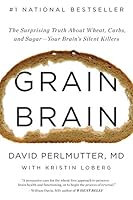
Author:: David Perlmutter
## Highlights
> Having diabetes doubles your risk for Alzheimer’s disease. ([Location 91](https://readwise.io/to_kindle?action=open&asin=B00BAXFCPO&location=91))
> As an example, a recent report in the prestigious Archives of Internal Medicine revealed that postmenopausal women who were put on statin drugs to lower their cholesterol had a nearly 48 percent increased risk of developing diabetes compared to those who weren’t given the drug.2 This one example becomes even more critical when you consider that becoming diabetic doubles your risk for Alzheimer’s disease. ([Location 114](https://readwise.io/to_kindle?action=open&asin=B00BAXFCPO&location=114))
> when cholesterol levels are low, the brain simply doesn’t work well; individuals with low cholesterol are at much greater risk for dementia and other neurological problems. We need to change our attitudes about cholesterol and even LDL; they are our friends, not foes. ([Location 563](https://readwise.io/to_kindle?action=open&asin=B00BAXFCPO&location=563))
> Fat—not carbohydrate—is the preferred fuel of human metabolism and has been for all of human evolution. We have consumed a high-fat diet for the past two million years, and it is only since the advent of agriculture about ten thousand years ago that carbohydrates have become abundant in our food supply. ([Location 1108](https://readwise.io/to_kindle?action=open&asin=B00BAXFCPO&location=1108))
> If you can limit carb intake to a range that is absolutely necessary (the details of which are in chapter 10) and make up the difference with delicious fats and protein, you can literally reprogram your genes back to the factory setting you had at birth. This is the setting that affords you the ability to be a mentally sharp, fat-burning machine. ([Location 1508](https://readwise.io/to_kindle?action=open&asin=B00BAXFCPO&location=1508))
> Your liver takes care of the fructose component of sugar. Glucose from other carbs and starches, on the other hand, is processed by every cell in the body. So consuming both types of sugar (fructose and glucose) at the same time means your liver has to work harder than if you ate the same number of calories from glucose alone. And your liver will also be taxed if it’s hit with liquid forms of these sugars, those found in soda or fruit juices. Drinking liquid sugar is not the same as eating, say, an equivalent dose of sugar in whole apples. ([Location 1598](https://readwise.io/to_kindle?action=open&asin=B00BAXFCPO&location=1598))
> THE FATTER YOU ARE, THE SMALLER YOUR BRAIN ([Location 1818](https://readwise.io/to_kindle?action=open&asin=B00BAXFCPO&location=1818))
> people with more education have a lower risk for Alzheimer’s disease, and that protection from age-related neurodegenerative disorders in general likely begins during the first several decades of life. To this end, Dr. Mattson points to studies that show how individuals with the best linguistic abilities as young adults have a reduced risk for dementia. ([Location 2173](https://readwise.io/to_kindle?action=open&asin=B00BAXFCPO&location=2173))
> coffee is one of the most powerful Nrf2 activators in nature. ([Location 2241](https://readwise.io/to_kindle?action=open&asin=B00BAXFCPO&location=2241))
> depression runs much higher in people who have low cholesterol.22 And people who start taking cholesterol-lowering medication (i.e., statins) can become much more depressed. ([Location 2474](https://readwise.io/to_kindle?action=open&asin=B00BAXFCPO&location=2474))
> It’s imperative to lower carb intake to just 30 to 40 grams a day for four weeks. After that, you can increase your carb intake to 60 grams a day. ([Location 3425](https://readwise.io/to_kindle?action=open&asin=B00BAXFCPO&location=3425))
---
Title: Grain Brain
Author: David Perlmutter
Tags: readwise, books
date: 2024-01-30
---
# Grain Brain

Author:: David Perlmutter
## AI-Generated Summary
None
## Highlights
> Having diabetes doubles your risk for Alzheimer’s disease. ([Location 91](https://readwise.io/to_kindle?action=open&asin=B00BAXFCPO&location=91))
> As an example, a recent report in the prestigious Archives of Internal Medicine revealed that postmenopausal women who were put on statin drugs to lower their cholesterol had a nearly 48 percent increased risk of developing diabetes compared to those who weren’t given the drug.2 This one example becomes even more critical when you consider that becoming diabetic doubles your risk for Alzheimer’s disease. ([Location 114](https://readwise.io/to_kindle?action=open&asin=B00BAXFCPO&location=114))
> when cholesterol levels are low, the brain simply doesn’t work well; individuals with low cholesterol are at much greater risk for dementia and other neurological problems. We need to change our attitudes about cholesterol and even LDL; they are our friends, not foes. ([Location 563](https://readwise.io/to_kindle?action=open&asin=B00BAXFCPO&location=563))
> Fat—not carbohydrate—is the preferred fuel of human metabolism and has been for all of human evolution. We have consumed a high-fat diet for the past two million years, and it is only since the advent of agriculture about ten thousand years ago that carbohydrates have become abundant in our food supply. ([Location 1108](https://readwise.io/to_kindle?action=open&asin=B00BAXFCPO&location=1108))
> If you can limit carb intake to a range that is absolutely necessary (the details of which are in chapter 10) and make up the difference with delicious fats and protein, you can literally reprogram your genes back to the factory setting you had at birth. This is the setting that affords you the ability to be a mentally sharp, fat-burning machine. ([Location 1508](https://readwise.io/to_kindle?action=open&asin=B00BAXFCPO&location=1508))
> Your liver takes care of the fructose component of sugar. Glucose from other carbs and starches, on the other hand, is processed by every cell in the body. So consuming both types of sugar (fructose and glucose) at the same time means your liver has to work harder than if you ate the same number of calories from glucose alone. And your liver will also be taxed if it’s hit with liquid forms of these sugars, those found in soda or fruit juices. Drinking liquid sugar is not the same as eating, say, an equivalent dose of sugar in whole apples. ([Location 1598](https://readwise.io/to_kindle?action=open&asin=B00BAXFCPO&location=1598))
> THE FATTER YOU ARE, THE SMALLER YOUR BRAIN ([Location 1818](https://readwise.io/to_kindle?action=open&asin=B00BAXFCPO&location=1818))
> people with more education have a lower risk for Alzheimer’s disease, and that protection from age-related neurodegenerative disorders in general likely begins during the first several decades of life. To this end, Dr. Mattson points to studies that show how individuals with the best linguistic abilities as young adults have a reduced risk for dementia. ([Location 2173](https://readwise.io/to_kindle?action=open&asin=B00BAXFCPO&location=2173))
> coffee is one of the most powerful Nrf2 activators in nature. ([Location 2241](https://readwise.io/to_kindle?action=open&asin=B00BAXFCPO&location=2241))
> depression runs much higher in people who have low cholesterol.22 And people who start taking cholesterol-lowering medication (i.e., statins) can become much more depressed. ([Location 2474](https://readwise.io/to_kindle?action=open&asin=B00BAXFCPO&location=2474))
> It’s imperative to lower carb intake to just 30 to 40 grams a day for four weeks. After that, you can increase your carb intake to 60 grams a day. ([Location 3425](https://readwise.io/to_kindle?action=open&asin=B00BAXFCPO&location=3425))