# The Dip
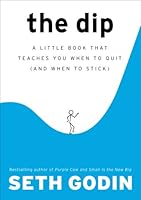
Author:: Seth Godin
## Highlights
> The (Real) Reason Number One Matters The second reason there are such tremendous benefits to being number one is a little more subtle. Being at the top matters because there’s room at the top for only a few. Scarcity makes being at the top worth something. ([Location 101](https://readwise.io/to_kindle?action=open&asin=B000QCSA54&location=101))
> Just about everything you learned in school about life is wrong, but the wrongest thing might very well be this: Being well rounded is the secret to success. ([Location 147](https://readwise.io/to_kindle?action=open&asin=B000QCSA54&location=147))
> In a free market, we reward the exceptional. ([Location 153](https://readwise.io/to_kindle?action=open&asin=B000QCSA54&location=153))
> Strategic quitting is the secret of successful organizations. Reactive quitting and serial quitting are the bane of those that strive (and fail) to get what they want. And most people do just that. They quit when it’s painful and stick when they can’t be bothered to quit. ([Location 168](https://readwise.io/to_kindle?action=open&asin=B000QCSA54&location=168))
> CURVE 1: THE DIP Almost everything in life worth doing is controlled by the Dip. ([Location 172](https://readwise.io/to_kindle?action=open&asin=B000QCSA54&location=172))
> And then the Dip happens. The Dip is the long slog between starting and mastery. A long slog that’s actually a shortcut, because it gets you where you want to go faster than any other path. The Dip is the combination of bureaucracy and busywork you must deal with in order to get certified in scuba diving. The Dip is the difference between the easy “beginner” technique and the more useful “expert” approach in skiing or fashion design. The Dip is the long stretch between beginner’s luck and real accomplishment. ([Location 177](https://readwise.io/to_kindle?action=open&asin=B000QCSA54&location=177))
> CURVE 2: THE CUL-DE-SAC The Cul-de-Sac (French for “dead end”) is so simple it doesn’t even need a chart. It’s a situation where you work and you work and you work and nothing much changes. It doesn’t get a lot better, it doesn’t get a lot worse. It just is. ([Location 199](https://readwise.io/to_kindle?action=open&asin=B000QCSA54&location=199))
> It Is Worth Doing, There’s Probably a Dip ([Location 216](https://readwise.io/to_kindle?action=open&asin=B000QCSA54&location=216))
> The Dip creates scarcity; scarcity creates value. ([Location 220](https://readwise.io/to_kindle?action=open&asin=B000QCSA54&location=220))
> The Dip Is Where Success Happens If you haven’t already realized it, the Dip is the secret to your success. The people who set out to make it through the Dip—the people who invest the time and the energy and the effort to power through the Dip—those are the ones who become the best in the world. ([Location 233](https://readwise.io/to_kindle?action=open&asin=B000QCSA54&location=233))
> In a competitive world, adversity is your ally. The harder it gets, the better chance you have of insulating yourself from the competition. If that adversity also causes you to quit, though, it’s all for nothing. ([Location 253](https://readwise.io/to_kindle?action=open&asin=B000QCSA54&location=253))
> And yet the real success goes to those who obsess. The focus that leads you through the Dip to the other side is rewarded by a marketplace in search of the best in the world. A woodpecker can tap twenty times on a thousand trees and get nowhere, but stay busy. Or he can tap twenty-thousand times on one tree and get dinner. ([Location 285](https://readwise.io/to_kindle?action=open&asin=B000QCSA54&location=285))
> Simple: If you can’t make it through the Dip, don’t start. If you can embrace that simple rule, you’ll be a lot choosier about which journeys you start. ([Location 310](https://readwise.io/to_kindle?action=open&asin=B000QCSA54&location=310))
> Do you have the guts to quit when facing a Cul-de-Sac? ([Location 403](https://readwise.io/to_kindle?action=open&asin=B000QCSA54&location=403))
> The next time you catch yourself being average when you feel like quitting, realize that you have only two good choices: Quit or be exceptional. Average is for losers. ([Location 436](https://readwise.io/to_kindle?action=open&asin=B000QCSA54&location=436))
> The first is to pick the shortest line and get in it. Stick with it, no matter what. The second is to pick the shortest line and switch lines once (at a maximum) if something holds up your line—like the clueless person with a check but no check-cashing card. But that’s it, just one switch. The third is to pick the shortest line and keep scanning the other lines. Switch lines if a shorter one appears. Continue this process until you leave the store. The problem with the third strategy is obvious. Every time you switch lines, you’re starting over. In your search for a quick fix, you almost certainly waste time and you definitely waste energy jumping back and forth. ([Location 444](https://readwise.io/to_kindle?action=open&asin=B000QCSA54&location=444))
> think the advice-giver meant to say, “Never quit something with great long-term potential just because you can’t deal with the stress of the moment.” Now that’s good advice. ([Location 600](https://readwise.io/to_kindle?action=open&asin=B000QCSA54&location=600))
> Three Questions to Ask Before Quitting ([Location 618](https://readwise.io/to_kindle?action=open&asin=B000QCSA54&location=618))
> QUESTION 1: AM I PANICKING? ([Location 621](https://readwise.io/to_kindle?action=open&asin=B000QCSA54&location=621))
> QUESTION 2: WHO AM I TRYING TO INFLUENCE? ([Location 628](https://readwise.io/to_kindle?action=open&asin=B000QCSA54&location=628))
> If you’re trying to influence just one person, persistence has its limits. It’s easy to cross the line between demonstrating your commitment and being a pest. If you haven’t influenced him yet, it may very well be time to quit. ([Location 633](https://readwise.io/to_kindle?action=open&asin=B000QCSA54&location=633))
> Influencing one person is like scaling a wall. If you get over the wall the first few tries, you’re in. If you don’t, often you’ll find that the wall gets higher with each attempt. Influencing a market, on the other hand, is more of a hill than a wall. You can make progress, one step at a time, and as you get higher, it actually gets easier. People in the market talk to each other. They are influenced by each other. So every step of progress you make actually gets amplified. ([Location 643](https://readwise.io/to_kindle?action=open&asin=B000QCSA54&location=643))
> QUESTION 3: WHAT SORT OF MEASURABLE PROGRESS AM I MAKING? ([Location 646](https://readwise.io/to_kindle?action=open&asin=B000QCSA54&location=646))
> Quitting Before You Start Here’s an assignment for you: Write it down. Write down under what circumstances you’re willing to quit. And when. And then stick with it. Deciding in Advance When to Quit ([Location 673](https://readwise.io/to_kindle?action=open&asin=B000QCSA54&location=673))
> When should I quit? I need to decide now, not when I’m in the middle of it, and not when part of me is begging to quit. ([Location 716](https://readwise.io/to_kindle?action=open&asin=B000QCSA54&location=716))
---
Title: The Dip
Author: Seth Godin
Tags: readwise, books
date: 2024-01-30
---
# The Dip

Author:: Seth Godin
## AI-Generated Summary
None
## Highlights
> The (Real) Reason Number One Matters The second reason there are such tremendous benefits to being number one is a little more subtle. Being at the top matters because there’s room at the top for only a few. Scarcity makes being at the top worth something. ([Location 101](https://readwise.io/to_kindle?action=open&asin=B000QCSA54&location=101))
> Just about everything you learned in school about life is wrong, but the wrongest thing might very well be this: Being well rounded is the secret to success. ([Location 147](https://readwise.io/to_kindle?action=open&asin=B000QCSA54&location=147))
> In a free market, we reward the exceptional. ([Location 153](https://readwise.io/to_kindle?action=open&asin=B000QCSA54&location=153))
> Strategic quitting is the secret of successful organizations. Reactive quitting and serial quitting are the bane of those that strive (and fail) to get what they want. And most people do just that. They quit when it’s painful and stick when they can’t be bothered to quit. ([Location 168](https://readwise.io/to_kindle?action=open&asin=B000QCSA54&location=168))
> CURVE 1: THE DIP Almost everything in life worth doing is controlled by the Dip. ([Location 172](https://readwise.io/to_kindle?action=open&asin=B000QCSA54&location=172))
> And then the Dip happens. The Dip is the long slog between starting and mastery. A long slog that’s actually a shortcut, because it gets you where you want to go faster than any other path. The Dip is the combination of bureaucracy and busywork you must deal with in order to get certified in scuba diving. The Dip is the difference between the easy “beginner” technique and the more useful “expert” approach in skiing or fashion design. The Dip is the long stretch between beginner’s luck and real accomplishment. ([Location 177](https://readwise.io/to_kindle?action=open&asin=B000QCSA54&location=177))
> CURVE 2: THE CUL-DE-SAC The Cul-de-Sac (French for “dead end”) is so simple it doesn’t even need a chart. It’s a situation where you work and you work and you work and nothing much changes. It doesn’t get a lot better, it doesn’t get a lot worse. It just is. ([Location 199](https://readwise.io/to_kindle?action=open&asin=B000QCSA54&location=199))
> It Is Worth Doing, There’s Probably a Dip ([Location 216](https://readwise.io/to_kindle?action=open&asin=B000QCSA54&location=216))
> The Dip creates scarcity; scarcity creates value. ([Location 220](https://readwise.io/to_kindle?action=open&asin=B000QCSA54&location=220))
> The Dip Is Where Success Happens If you haven’t already realized it, the Dip is the secret to your success. The people who set out to make it through the Dip—the people who invest the time and the energy and the effort to power through the Dip—those are the ones who become the best in the world. ([Location 233](https://readwise.io/to_kindle?action=open&asin=B000QCSA54&location=233))
> In a competitive world, adversity is your ally. The harder it gets, the better chance you have of insulating yourself from the competition. If that adversity also causes you to quit, though, it’s all for nothing. ([Location 253](https://readwise.io/to_kindle?action=open&asin=B000QCSA54&location=253))
> And yet the real success goes to those who obsess. The focus that leads you through the Dip to the other side is rewarded by a marketplace in search of the best in the world. A woodpecker can tap twenty times on a thousand trees and get nowhere, but stay busy. Or he can tap twenty-thousand times on one tree and get dinner. ([Location 285](https://readwise.io/to_kindle?action=open&asin=B000QCSA54&location=285))
> Simple: If you can’t make it through the Dip, don’t start. If you can embrace that simple rule, you’ll be a lot choosier about which journeys you start. ([Location 310](https://readwise.io/to_kindle?action=open&asin=B000QCSA54&location=310))
> Do you have the guts to quit when facing a Cul-de-Sac? ([Location 403](https://readwise.io/to_kindle?action=open&asin=B000QCSA54&location=403))
> The next time you catch yourself being average when you feel like quitting, realize that you have only two good choices: Quit or be exceptional. Average is for losers. ([Location 436](https://readwise.io/to_kindle?action=open&asin=B000QCSA54&location=436))
> The first is to pick the shortest line and get in it. Stick with it, no matter what. The second is to pick the shortest line and switch lines once (at a maximum) if something holds up your line—like the clueless person with a check but no check-cashing card. But that’s it, just one switch. The third is to pick the shortest line and keep scanning the other lines. Switch lines if a shorter one appears. Continue this process until you leave the store. The problem with the third strategy is obvious. Every time you switch lines, you’re starting over. In your search for a quick fix, you almost certainly waste time and you definitely waste energy jumping back and forth. ([Location 444](https://readwise.io/to_kindle?action=open&asin=B000QCSA54&location=444))
> think the advice-giver meant to say, “Never quit something with great long-term potential just because you can’t deal with the stress of the moment.” Now that’s good advice. ([Location 600](https://readwise.io/to_kindle?action=open&asin=B000QCSA54&location=600))
> Three Questions to Ask Before Quitting ([Location 618](https://readwise.io/to_kindle?action=open&asin=B000QCSA54&location=618))
> QUESTION 1: AM I PANICKING? ([Location 621](https://readwise.io/to_kindle?action=open&asin=B000QCSA54&location=621))
> QUESTION 2: WHO AM I TRYING TO INFLUENCE? ([Location 628](https://readwise.io/to_kindle?action=open&asin=B000QCSA54&location=628))
> If you’re trying to influence just one person, persistence has its limits. It’s easy to cross the line between demonstrating your commitment and being a pest. If you haven’t influenced him yet, it may very well be time to quit. ([Location 633](https://readwise.io/to_kindle?action=open&asin=B000QCSA54&location=633))
> Influencing one person is like scaling a wall. If you get over the wall the first few tries, you’re in. If you don’t, often you’ll find that the wall gets higher with each attempt. Influencing a market, on the other hand, is more of a hill than a wall. You can make progress, one step at a time, and as you get higher, it actually gets easier. People in the market talk to each other. They are influenced by each other. So every step of progress you make actually gets amplified. ([Location 643](https://readwise.io/to_kindle?action=open&asin=B000QCSA54&location=643))
> QUESTION 3: WHAT SORT OF MEASURABLE PROGRESS AM I MAKING? ([Location 646](https://readwise.io/to_kindle?action=open&asin=B000QCSA54&location=646))
> Quitting Before You Start Here’s an assignment for you: Write it down. Write down under what circumstances you’re willing to quit. And when. And then stick with it. Deciding in Advance When to Quit ([Location 673](https://readwise.io/to_kindle?action=open&asin=B000QCSA54&location=673))
> When should I quit? I need to decide now, not when I’m in the middle of it, and not when part of me is begging to quit. ([Location 716](https://readwise.io/to_kindle?action=open&asin=B000QCSA54&location=716))